
 > Nautitech for sale
Nautitech for sale
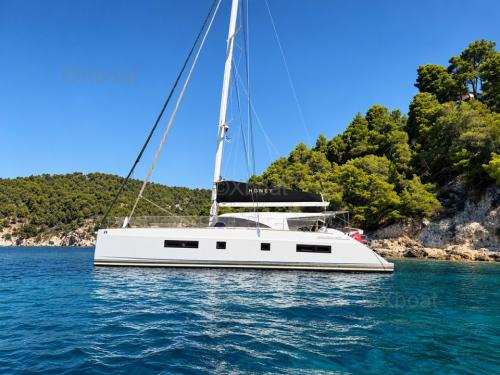
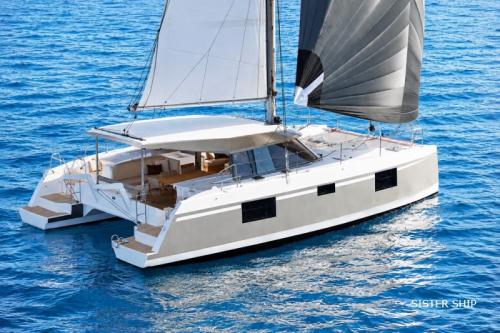
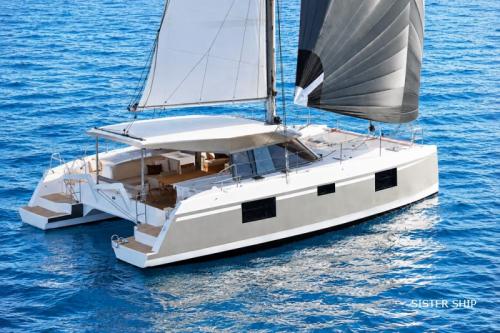
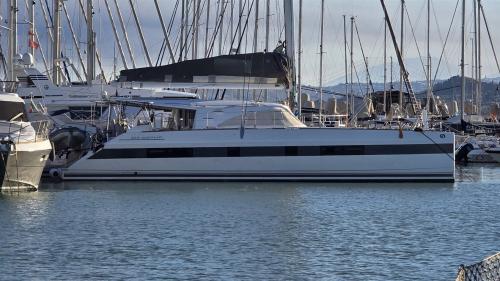
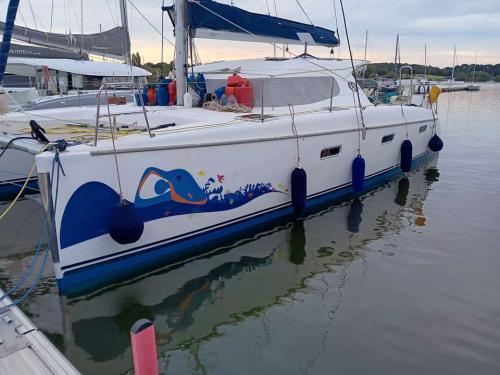
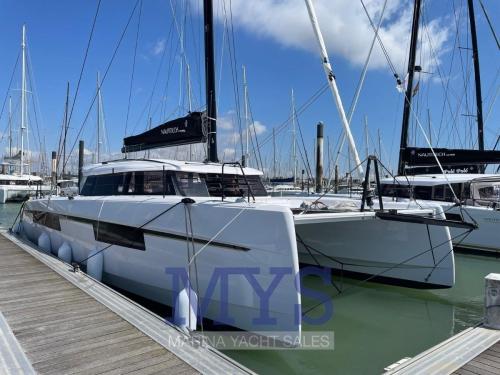
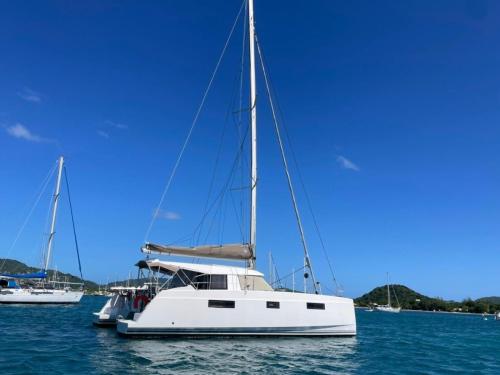
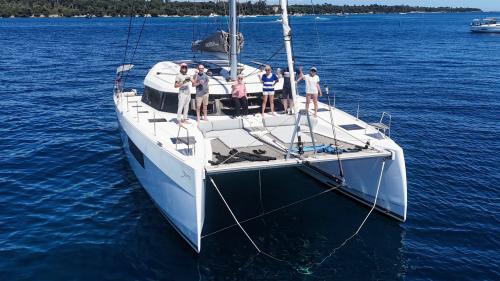
nautitech 44 open
730 000€ All Tax IncludedUsed
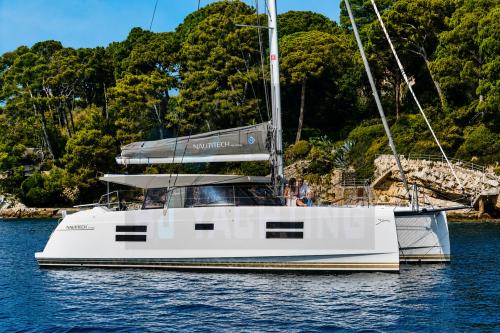
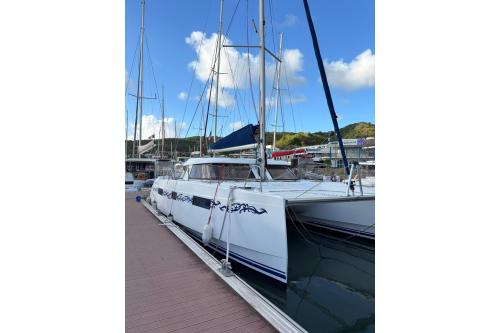
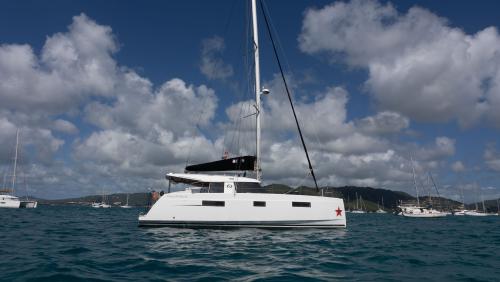
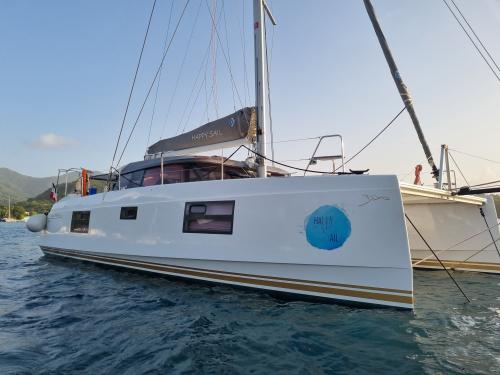
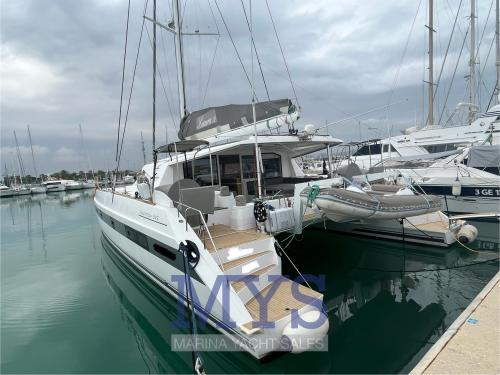
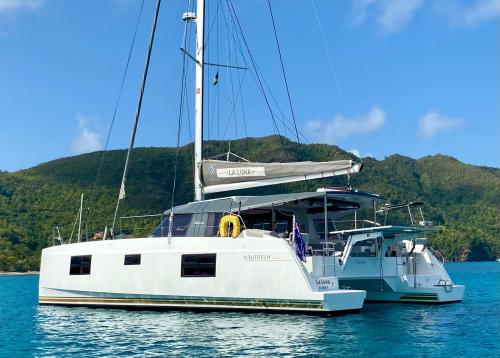
nautitech nautitech 44 open
608 400€ excluding taxUsed
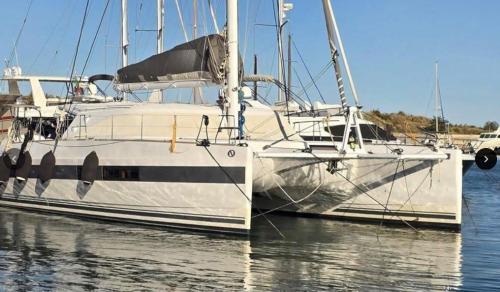
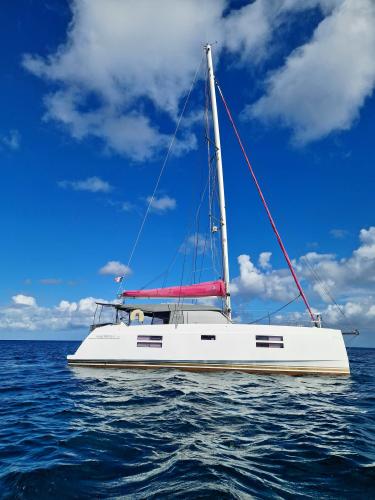
nautitech catamarans 40 open
355 000€ All Tax IncludedPre owned
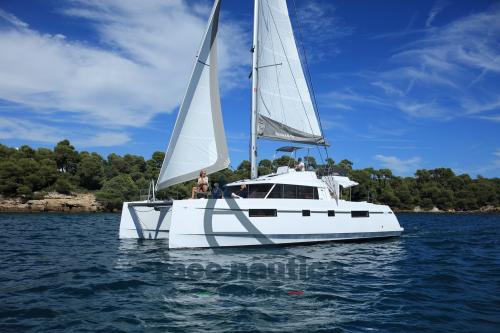
nautitech nautitech 46 fly
500 000€ excluding taxUsed
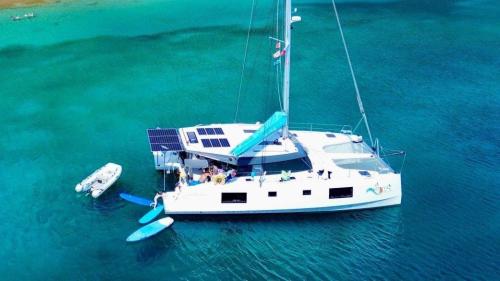
nautitech catamarans 46 open
719 000€ All Tax IncludedPre owned
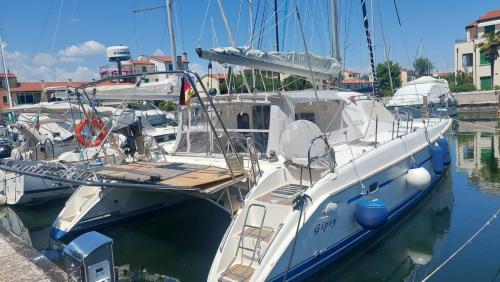
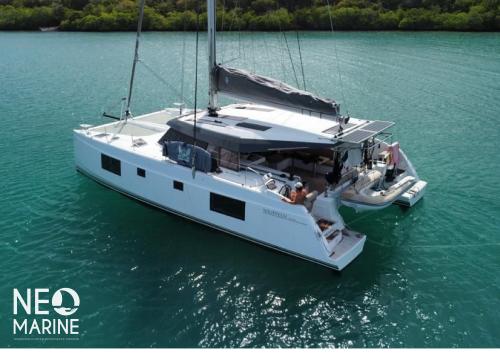
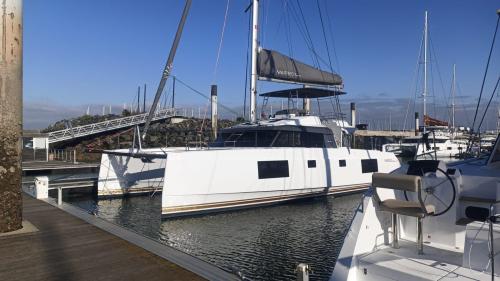
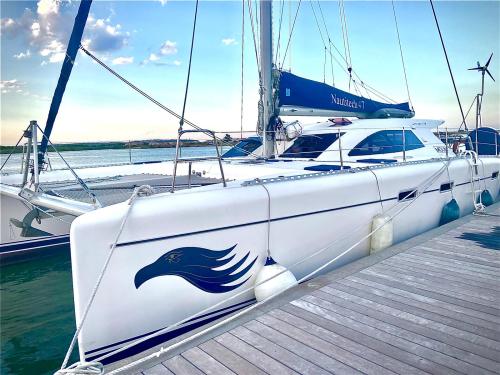
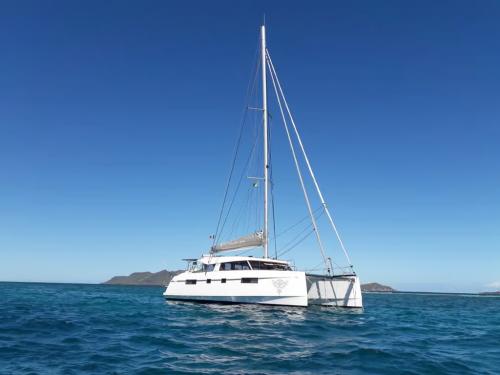
nautitech catamarans 46 open
520 000€ All Tax IncludedPre owned
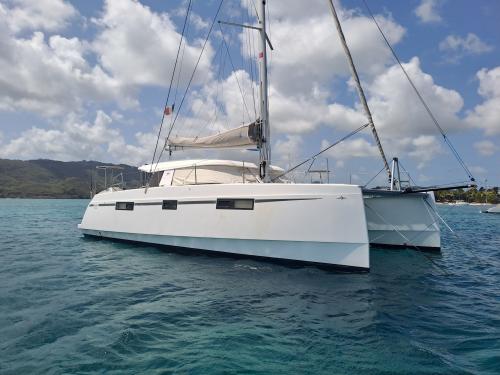
nautitech catamarans 40 open
315 000€ All Tax IncludedPre owned

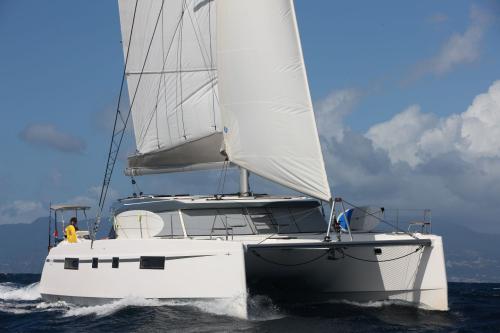
nautitech catamarans 46 open
495 000€ excluding taxPre owned
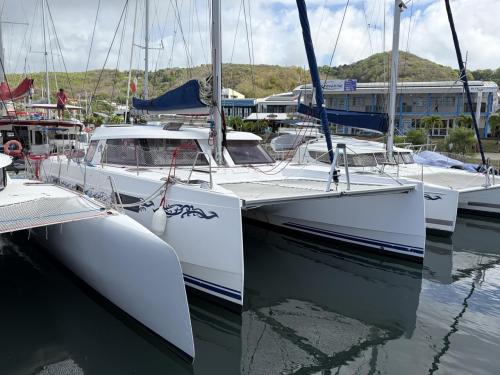
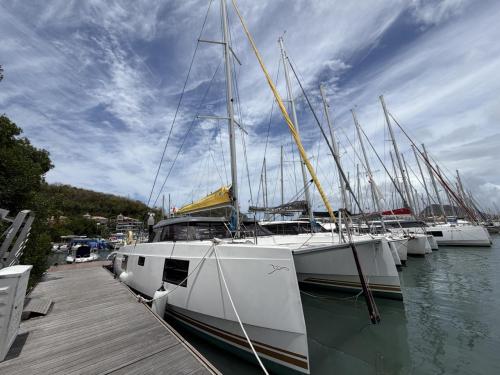
Nautitech second-hand catamarans: the performance choice for sailors who don't want a Lagoon
Nautitech is the brand that serious sailors consistently mention when asked which catamaran they would choose if they didn't want a Lagoon or a Fountaine Pajot. Not because those brands are poor choices — they are excellent. But because Nautitech offers something different: a blue-water cruising catamaran that does not sacrifice the pleasure of sailing on the altar of habitable volume.
The La Rochelle-based yard, founded in 1995, built its reputation on a simple and radical conviction: a catamaran must sail before it impresses at the dock. This philosophy is evident in every choice made by Marc Lombard — the naval architect who has signed virtually the entire Nautitech range — and it explains why Nautitech owners speak of their boats with a loyalty that goes beyond simple commercial satisfaction.
Nautitech and Marc Lombard: an enduring architectural alliance
In the cruising catamaran industry, few yards maintain with their architect a relationship as continuous and as coherent as Nautitech's with Marc Lombard. This Gironde-based naval designer has shaped the brand's technical identity since its origins, applying a consistent philosophy: fine bows, optimised appendages, generous sail area-to-displacement ratios, and pivoting keels on the models so equipped.
The result is measurable and proven: Nauitechs are among the cruising production catamarans that point highest upwind in their category. A well-tuned Nautitech 40 Open on a close-hauled tack in 15 knots of true wind makes a noticeable difference compared to a Lagoon 42 or a Fountaine Pajot Lucia of the same era. This is not a value judgement on those boats' habitability or comfort — it is a nautical performance fact that is Nautitech's reason for being.
The major Nautitech families: reading the second-hand market
The Nautitech second-hand market on this page covers a range of models and model years that requires careful reading to identify the right purchase.
The Nautitech 40 Open (11.98 metres) is the most widespread model on the second-hand market — it is the brand's commercial backbone. The term "Open" designates its central architecture: a large cockpit flush with the saloon, fluid circulation between interior and exterior, and a shared living space that does not compartmentalise the boat into hermetic zones. Listings on this page cover model years from 2008 to 2022, between €169,000 for a 2008 example and €480,000 for a well-maintained 2022. This is an active market, with buyers who know the brand — Nautitech 40s don't stay listed long when correctly presented.
The Nautitech 44 Open (13.30 metres) is the intermediate model — larger than the 40, less imposing than the 46. A single 2023 example at €608,400 ex-VAT on this page reflects the rarity of this model on the French market. It is a boat for owners who want the comfort of the 46 in a slightly more manageable format.
The Nautitech 46 Open and 46 Fly (13.71 to 13.79 metres depending on version) is the current flagship model. The Open/Fly distinction deserves explanation: the Open version is the clear concept without a flybridge — generous cockpit, airy deck plan, sporting navigation. The Fly version adds a full flybridge that transforms the boat into additional living space but distances it slightly from the pure performance philosophy for which Nautitech is recognised. Listings from 2018 to 2023 negotiate between €480,000 and €720,000 depending on version, model year, condition and equipment.
The Nautitech 47 (14.50 metres) is an older generation — the 2004 example at €349,000 visible on this page is a venerable boat with a serious sailing history. These are boats for experienced sailors seeking size and ocean capability on a controlled budget, accepting the maintenance requirements of a twenty-year-old vessel.
The Nautitech 542 (16.00 to 16.30 metres) is the grand voyager — a 16-metre catamaran designed for circumnavigations and extended blue-water cruising. The three 2017 examples on this page, between €750,000 and €850,000 ex-VAT, are capable, well-equipped boats whose owners invested in their autonomy. This is a niche market with very specific buyers.
What the "Open" concept actually delivers
The term "Open" in the Nautitech range deserves a precise explanation, because it is often misunderstood and it structures the brand's market essentially.
On a traditional catamaran, the saloon is in the coachroof, the cockpit is aft, and the two are separated by a bulkhead with a sliding door. This is functional and protected in bad weather, but inherently closed.
On a Nautitech Open, this separation is eliminated or minimised: the cockpit and saloon are at the same level, with no step or partition. You move from one to the other naturally, circulation is fluid, sociability is total. This concept was pioneered by Nautitech before being adopted by Bali Catamarans who made it their principal commercial signature. The difference between the two lies in philosophy: at Bali, the Open concept primarily serves sociability at anchor; at Nautitech, it also serves performance and manoeuvrability.
The trade-off of the Open is reduced protection in bad weather. In rough seas or rain, the absence of a bulkhead allows spray and moisture to enter more easily than a closed architecture. For the Mediterranean in summer or the Caribbean, this is a non-issue. For Atlantic sailing or northern European waters, it is a factor to consider seriously.
The owner versus charter distinction at Nautitech
Like Lagoon and Fountaine Pajot, a proportion of second-hand Nauitechs comes from the charter market — particularly in the French Antilles, where the brand is strongly established. This distinction is important and reads clearly in the listings.
Examples described as "first and only owner" — such as the 2017 Nautitech 40 Open at Antibes or the well-maintained 2018 46 Open in Martinique with its documented 11,000 miles — represent the good purchases in this market. These boats have sailed, sometimes extensively, but with an owner who knows their boat and has maintained it accordingly.
Charter examples — more common in the Caribbean — deserve the same vigilance as with any brand: inspection of winches, clutches, sails, upholstery and engines before any decision. The strong concentration of listings in Le Marin, Martinique is explained precisely by the exit from charter of numerous Caribbean-based units.
What sailors say that specification sheets don't
Over the years, Nautitech owners consistently converge on several points that appear in no specification sheet.
The first is helm precision. A well-tuned Nautitech 40 or 46 responds with a liveliness that its direct competitors don't always achieve. The twin wheels of the Fly version, or the raised helm stations of the Open version, provide a reading of the sea and a steering sensation that many sailors coming from Lagoon or FP discover with genuine surprise.
The second is keel management on versions so equipped. Pivoting keels significantly improve upwind performance — but they need to be managed, raised before shallow approaches, and maintained. This is not a major constraint for experienced sailors, but it is a parameter that new owners must integrate.
The third is robust construction. Nauitechs have a reputation for solidity among blue-water sailors. Several examples have completed circumnavigations without major incident — which, for a production catamaran, is a serious testimonial.
What to check when buying second-hand
The sails are the first item to check on any second-hand Nautitech — and particularly on Caribbean examples. A catamaran that has sailed 15,000 miles in charter may have original sails that have given a great deal. A new full-batten mainsail of 70-80 m² on a Nautitech 40 represents €7,000 to €12,000 depending on quality. Ask for the age and estimated mileage of the sails before any viewing.
Volvo Penta SailDrive engines are the most common powertrain across the range — the SailDrive bellows joint is the recurring vigilance point across the brand, as on Bavaria or Dufour models equipped in the same way. Demand the date of the last replacement with invoice.
Pivoting keels on equipped versions deserve an inspection of the lifting mechanism and the condition of the keels themselves — wear, play, well sealing.
Hull structure on Caribbean examples that have stayed afloat continuously deserves a serious moisture meter reading. Warm tropical waters accelerate osmotic processes on untreated polyester hulls.
Nautitech market prices in 2025-2026
| Model | Year | Indicative price |
|---|---|---|
| Nautitech 40 (older generation) | 2008-2012 | €165,000 – €220,000 incl. VAT |
| Nautitech 40 Open (charter version) | 2015-2019 | €225,000 – €320,000 incl. VAT |
| Nautitech 40 Open (owner version) | 2017-2022 | €315,000 – €480,000 incl. VAT |
| Nautitech 44 Open | 2022-2023 | €580,000 – €650,000 ex-VAT |
| Nautitech 46 Open / Fly (charter version) | 2018-2020 | €470,000 – €550,000 incl. VAT |
| Nautitech 46 Open / Fly (owner version) | 2020-2023 | €550,000 – €720,000 incl. VAT |
| Nautitech 47 (older generation) | 2002-2006 | €300,000 – €380,000 incl. VAT |
| Nautitech 542 | 2016-2019 | €720,000 – €900,000 ex-VAT |
Indicative ranges, market May 2026. VAT included unless otherwise stated.
Nautitech against its competitors: the honest positioning
Against a Lagoon 42 of the same era, the Nautitech 40 Open is more nautical, more alive at the helm, slightly less habitable in raw volume and less widespread on the market — which means slightly slower resale, compensated by less severe depreciation with age.
Against a Fountaine Pajot Lucia 40, the Nautitech 40 Open is comparable in performance and slightly superior in structural rigidity; FP has the advantage of the Maestro cabin on certain versions and a slightly deeper resale market.
Against a Bali 4.0 or 4.2, the Nautitech 40 Open is more nautical, better built for real navigation, less spectacular at anchor. Bali wins on the sociability-at-anchor register; Nautitech wins on the sailing-pleasure register.
Our summary: Nautitech is the choice of the sailor who genuinely sails — who makes passages, who enjoys feeling their boat, who prefers arriving two hours earlier at their anchorage. It is not the best choice for someone who primarily wants a spectacular floating apartment. These are two legitimate projects — you need to know which one is yours before arranging a viewing.
Our verdict
Nautitech is one of the most coherent cruising catamaran brands on the French market — coherent in its architectural choices, in its loyalty to Marc Lombard, and in the philosophy that places navigation above the press release effect. The brand's boats don't always generate excitement at the pontoon, but they make miles — often a great many miles, often far away.
For the buyer who wants a cruising catamaran they actually want to sail, not just anchor, Nautitech is a serious answer that few other production yards can offer with such consistency. The vigilance at second-hand purchase — sails, SailDrive, keels — is the condition for turning a good boat into an excellent purchase.