
 > Catamaran
Catamarans for sale
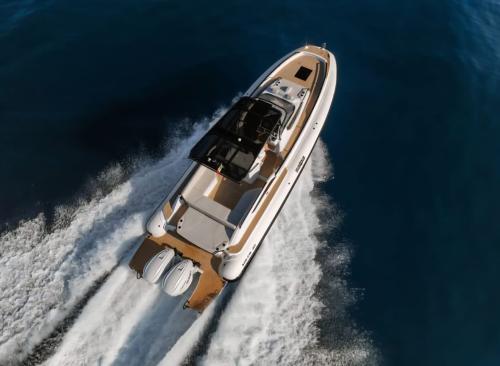
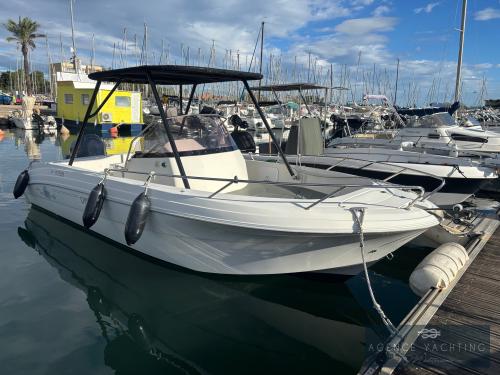
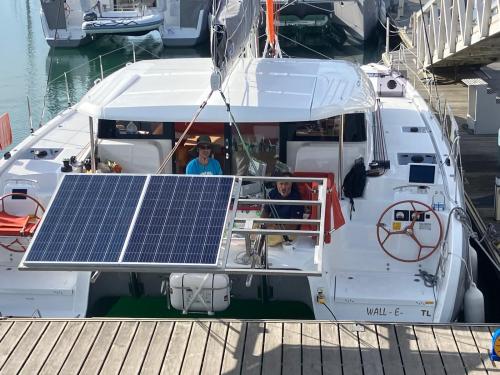
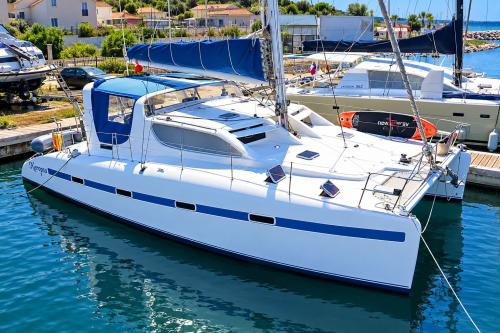
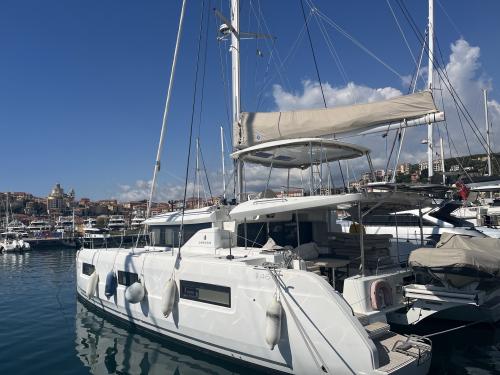
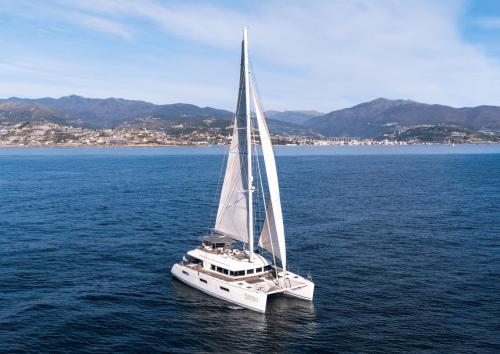
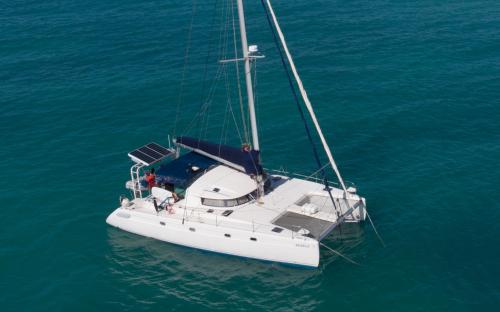
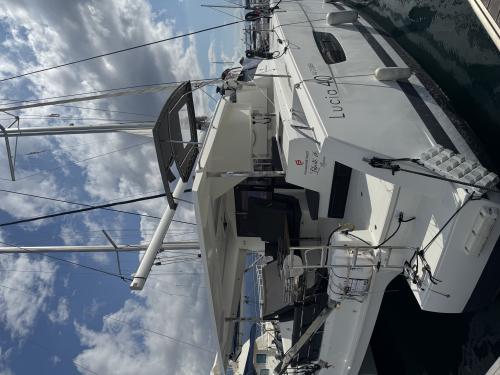
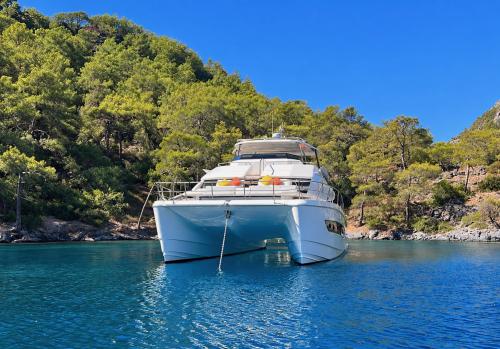
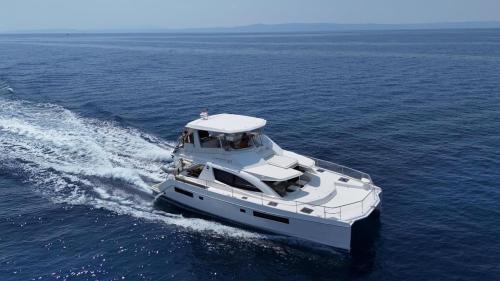
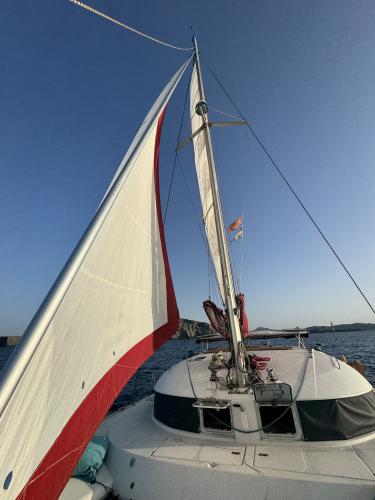
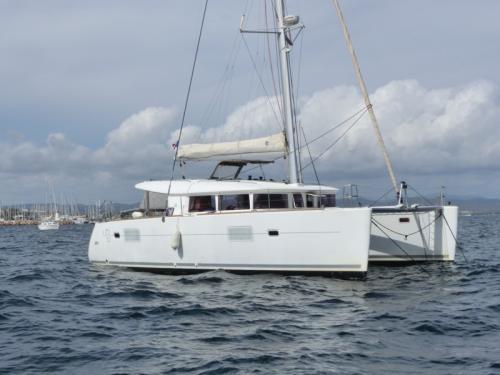
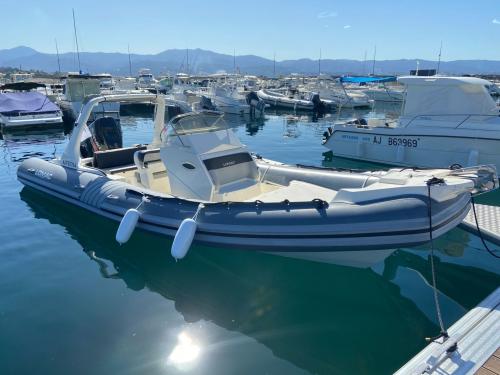
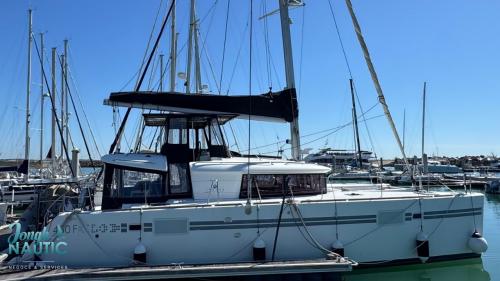
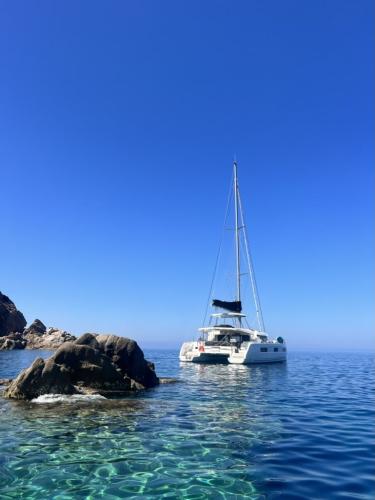

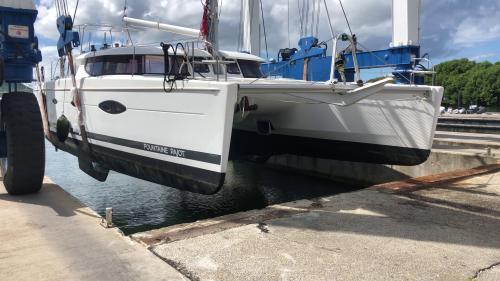
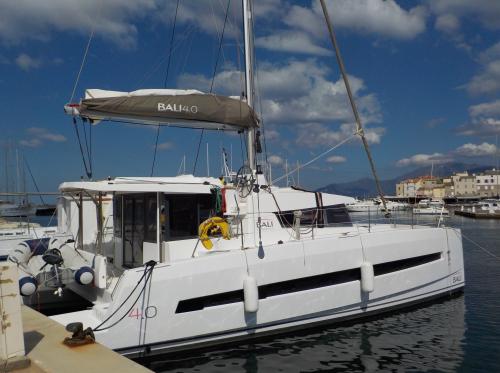
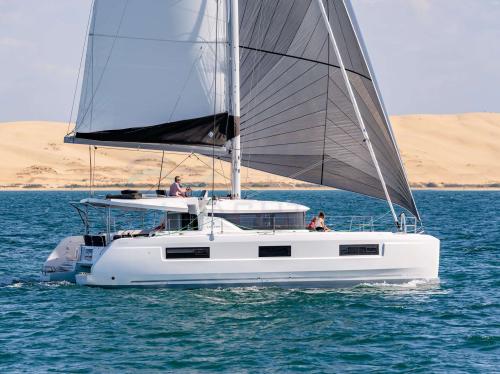
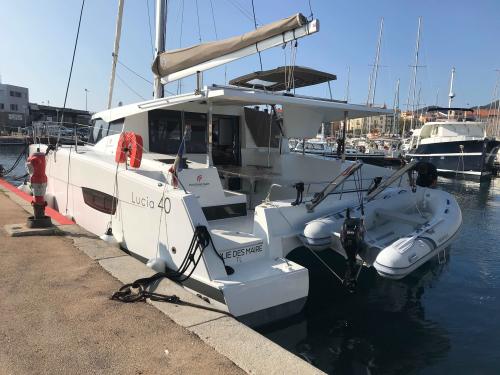
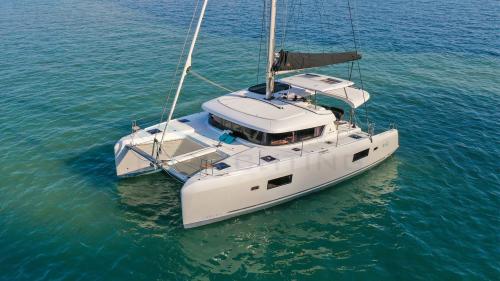
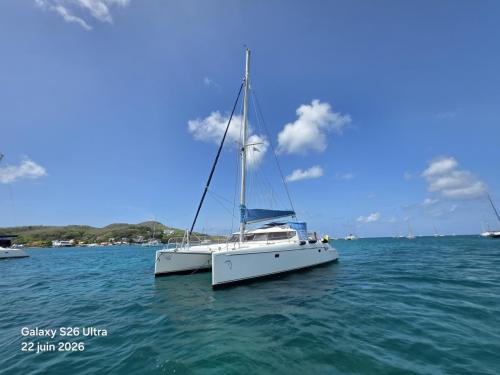
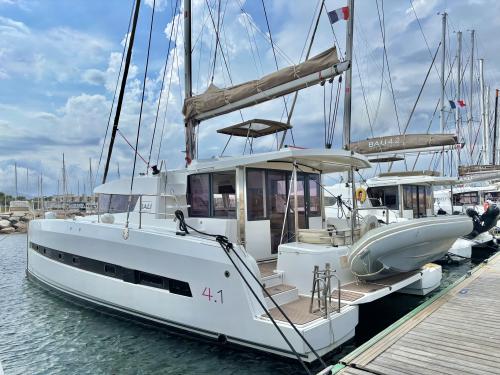
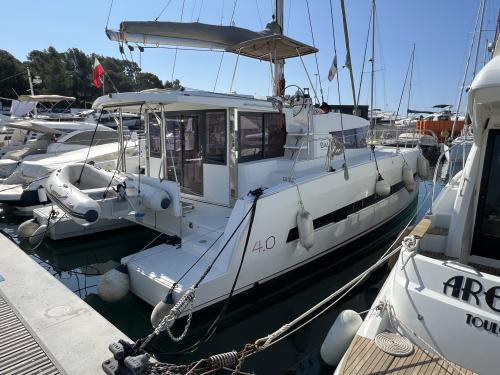
fountaine pajot lavezzi 40
170 000€ All Tax IncludedPre owned
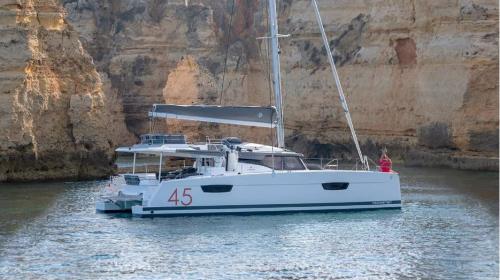
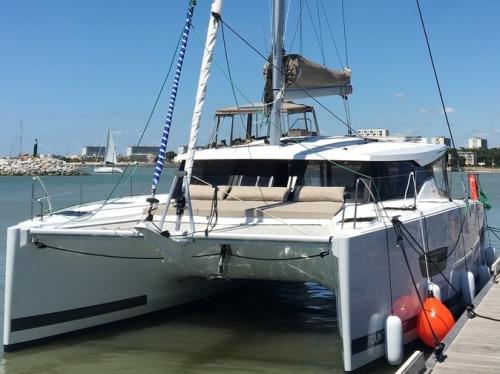
fountaine pajot lucia 40 3 cabines 2 sdb 2017
320 000€ All Tax IncludedUsed
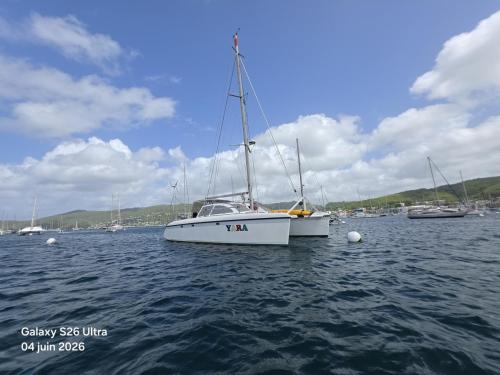


custom built boat maxi day charter catamaran 65
945 000€ excluding taxUsed


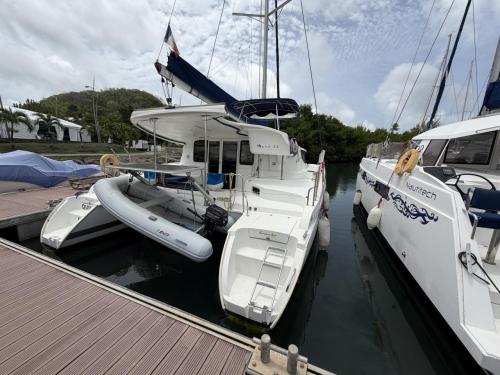

Catamaran brands
Catamaran & trimaran brands
Catamaran & trimaran brands
Used catamarans: why two similar listings can differ by 100,000 euros
On the used catamaran market, two examples of the same model, the same year, and identical length can be listed 80,000 to 150,000 euros apart. This is not a market anomaly — it is the direct consequence of three variables most buyers fail to read correctly: owner versus charter status, VAT situation, and the actual industrial group behind the name painted on the hull. This guide addresses these three points first, before even discussing price.
Catamaran or monohull: the real trade-offs
The catamaran has become the reference choice for family and offshore cruising for concrete reasons, but it also comes with constraints that sellers rarely highlight.
| What the catamaran delivers | What you accept in return |
|---|---|
| Near-total absence of heel, ideal for families and non-sailors | Purchase price 1.5 to 2 times higher than a monohull of the same length |
| Far greater living volume, 2 to 6 independent cabins depending on size | Berth costs 20 to 50% higher than an equivalent monohull |
| Shallow draft (0.8 to 1.5 m), access to anchorages monohulls cannot reach | Trickier close-quarters maneuvering under power without specific training |
| Faster downwind speed than most monohulls of the same length | Noticeably weaker upwind performance than a monohull |
| Unsinkable by design, two independent hulls | Two engines to service every year, hull-cleaning surface doubled |
| Very active resale market, among the shortest selling times in the industry | Price gap between two similar examples can exceed 100,000 € |
The three families of used catamarans
The term "catamaran" covers three very different uses, with budgets and buyer profiles that rarely overlap.
| Type | Typical use | Used price |
|---|---|---|
| Sailing cruising catamaran | Family cruising, circumnavigation, 2 to 6 cabins. Segment dominated by Lagoon, Fountaine Pajot, and Catana. | €100,000 – 900,000 |
| Power cat | Fast, effortless helming, large saloon open to the sea. Highly sought after in luxury charter. | €250,000 – 2,000,000+ |
| Trimaran | Maximum performance and speed, often foldable for a standard berth. Sport-sailor profile. | €80,000 – 500,000 |
Who owns whom: understanding the groups before comparing two listings
The used catamaran market is dominated by a small number of industrial groups, and knowing these ownership links avoids several common reading mistakes.
Lagoon belongs to Groupe Bénéteau, the world's largest pleasure-boat group, alongside Bénéteau, Jeanneau, and Prestige. This ownership translates concretely into one of the densest spare-parts and after-sales networks in Europe — a real factor at resale time.
Fountaine Pajot, despite a common misconception, does not belong to Groupe Bénéteau. It is an independent, publicly listed French group structured around La Compagnie du Catamaran, which also owns the monohull brand Dufour. A joint venture with Groupe Bénéteau was announced in 2026 for electric propulsion, but the two groups remain commercially distinct — Fountaine Pajot keeps its own dealer network and product strategy.
Catana and Bali are two brands under the same family group, Groupe Poncin (Catana Group), led since 2023 by Aurélien Poncin following his father Olivier Poncin's 2003 acquisition of Catana. Catana remains positioned on high-performance, blue-water catamarans, while Bali, launched in 2014, targets a wider audience with different layout concepts (tilt-and-turn door, open foredeck platform). The same group also owns the YOT power catamarans and the floating residential brand Seaty. A Catana and a Bali of the same year are therefore not strict competitors — they are two positioning strategies from the same manufacturer.
Nautitech, based in Rochefort, has changed hands several times: launched in 1994 under Groupe Dufour, sold to an independent buyer in 2001-2002, acquired by Germany's Bavaria in 2014, then by the private equity fund CMP (Capital Management Partners) in 2018, which remains the current owner. The brand has had no link to Dufour for over twenty years, despite a persistent misconception on this point.
Leopard is built by South African yard Robertson & Caine, deeply embedded in the global charter market — an origin that explains why a large share of used Leopards come from rental fleets rather than exclusive owner use.
Outremer (France) remains an independent yard specializing in fast, lightweight offshore catamarans, while Gemini (USA) offers compact, very shallow-draft catamarans with a more limited presence in Europe.
Price grid by size and use
| Size | Example models | Typical years | Used price |
|---|---|---|---|
| 10 – 11 m | Lagoon 380, Fountaine Pajot Tobago 35, Gemini 105 | 1995 – 2010 | €80,000 – 200,000 |
| 11 – 13 m | Lagoon 400/42, Fountaine Pajot Mahé/Lucia, Nautitech 40 | 2005 – 2020 | €200,000 – 550,000 |
| 13 – 15 m | Lagoon 450/46/50, Fountaine Pajot Saona 47/Astréa 42 | 2010 – 2022 | €400,000 – 900,000 |
| 15 – 20 m | Lagoon 500/52, Leopard 58, Catana 50+ | 2010 – 2022 | €600,000 – 2,000,000 |
| Power cat 9 – 15 m | Fountaine Pajot MY44/MY6, Sunreef Power, Leopard Power | 2015 – 2024 | €250,000 – 2,000,000+ |
Indicative price ranges, market as of May 2026. VAT included unless otherwise stated.
Owner version or charter version: what really changes at purchase
The owner version reserves a large cabin, usually forward or aft in one hull, at the expense of total berth count. The charter version instead maximizes the number of double cabins — often four or five — to accommodate more paying passengers. When buying used, a well-maintained owner-version example is generally valued higher, since it hasn't gone through the intensive wear of rental operation. A boat that has spent several seasons in charter accumulates 3 to 5 times more engine hours and winch cycles than an owner's boat over the same period — a gap that should be reflected in the negotiated price, not just in the listed build year.
Technical and administrative points to check before buying
Both hulls and the central bridgedeck — inspection must cover the condition of both hulls (osmosis, cracks, impact damage on leading edges) as well as the bridgedeck connecting them, a structural point specific to catamarans where untreated delamination or impact damage can seriously affect sea-handling.
Both engines — hours, service history, and through-hull condition must be checked separately for each of the two engines; one well-maintained engine does not compensate for a neglected second one.
The full rig — shrouds, forestay, boom, and genoa/mainsail furlers wear differently depending on sailing intensity; on a former charter boat, a professional rig inspection is recommended before finalizing any negotiation.
Administrative documents — proof of registration or title from the country of origin, a lien-free check with the maritime mortgage registry, VAT status (paid or unpaid, with direct impact on price and future resale), CE design-category certificate, and a complete maintenance log with invoices for both engines.
Real annual budget for a used catamaran
| Item | Indicative annual cost | Detail |
|---|---|---|
| Berth | €1,500 – 10,000 | Catamaran berths cost 20 to 50% more than an equivalent-length monohull |
| Insurance | 1 – 2% of insured value | Varies by cruising area, boat value, and owner or charter use |
| Hull maintenance and antifouling | €2,000 – 6,000 | Two hulls to treat, double the surface of a monohull, plus servicing for both engines |
| Rigging and sails | €500 – 3,000 | Shrouds renewed every 10-15 years, sails every 8-12 years depending on use |
For a used 12 m catamaran bought at €350,000, expect between €8,000 and 18,000 in annual costs excluding financing — roughly 2 to 5% of the purchase price per year. This cost can be partially offset by occasional rental income outside personal-use periods.
Catamaran and charter: a double-edged investment
Placing a catamaran in a charter fleet can cover 30 to 60% of annual costs depending on the contract, with maintenance handled by the management company and typically 4 to 8 weeks of personal use retained per year. The trade-off is real: a chartered boat wears noticeably faster, allows less customization, and the management contract typically runs a minimum of 5 to 7 years. On exiting the fleet, residual value is consistently lower than an equivalent boat kept in exclusive owner use over the same period — a factor to build into any profitability calculation before committing.
Frequently asked questions about buying a used catamaran
What's the minimum budget for a used catamaran in good condition?
For a cruising catamaran ready to sail, the realistic minimum budget sits between €100,000 and 130,000 for a 10-11 m model from 1995-2005. Below that threshold, significant work should be expected. For stress-free technical ownership, a range of €180,000 to 250,000 for a more recent model with a complete maintenance history is more realistic.
What size catamaran for a family of four?
The comfortable minimum for a family of four sits around 11 meters, in a two-cabin, two-head configuration. For longer cruises with overnight passages, a minimum of 12-13 meters is preferable for comfort and safety.
What does "VAT paid" mean and why does it matter?
"VAT paid" means the tax (20% in France) has already been settled when the boat first entered circulation in the European Union. This is essential for sailing freely in EU waters without risk of a customs reassessment. A "VAT unpaid" catamaran is generally cheaper to buy, but VAT will need to be settled on import to sail in Europe — a point to check systematically before any negotiation.
Lagoon or Fountaine Pajot: which to choose used?
Lagoon typically offers greater living volume and a very open central saloon, with the advantage of a dense parts and after-sales network thanks to its Groupe Bénéteau ownership. Fountaine Pajot generally offers more dynamic sea-handling and reputedly careful finishing, with its own independent network. Both brands retain excellent resale value on the European market; the final choice mostly comes down to which model is available within your budget at the time of searching.
Do you need a special license to sail a catamaran?
No, there is no license specific to catamarans: the same rules as for monohulls apply, with a coastal license required beyond 6 hp up to 6 nautical miles from shore, and an offshore extension recommended beyond that. Maneuvering a catamaran under power, however — wider and twin-engined — calls for hands-on practice; many sailing schools offer courses specific to multihulls.
Our verdict
The used catamaran remains one of the most active and resale-profitable segments of the European boating market, but it is also one where the gap between a good and a bad purchase is decided before you even look at the hull: understanding who actually owns the brand, distinguishing an owner history from a charter history, and checking the VAT status before any negotiation. At equivalent budget and size, these three checks often weigh more heavily on the final decision than the choice between two competing builders.