

Sanlorenzo Yacht for sale
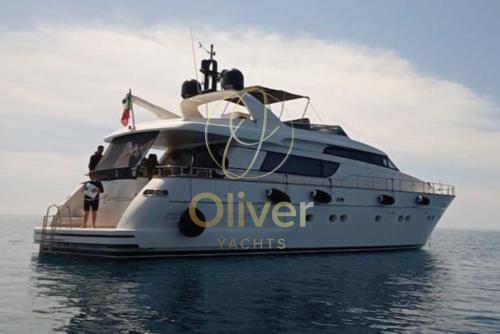
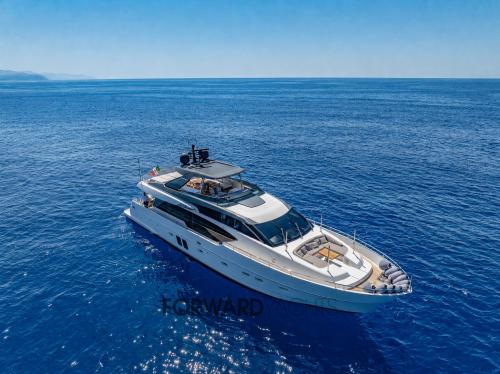
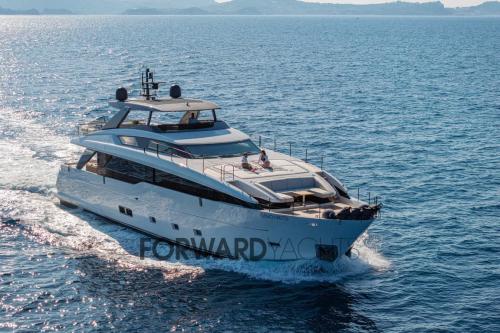
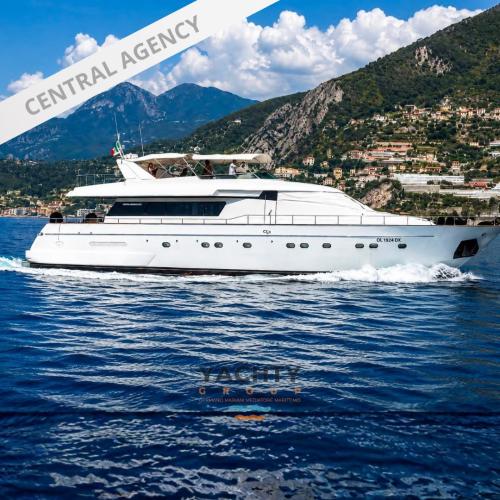
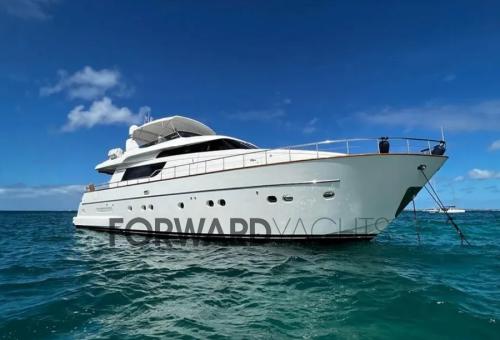
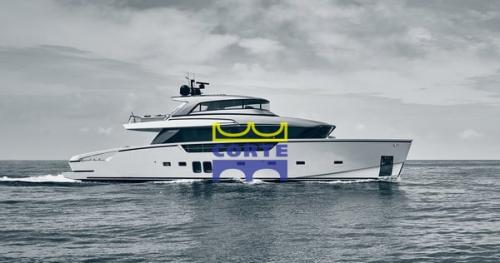
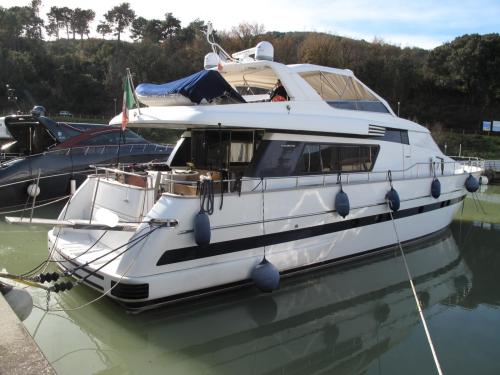
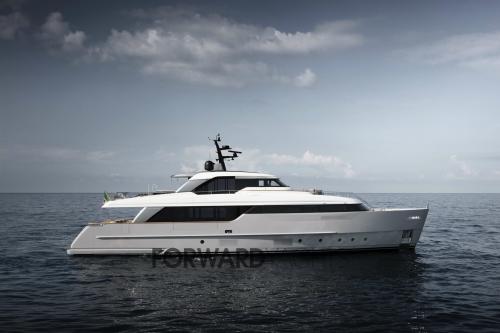
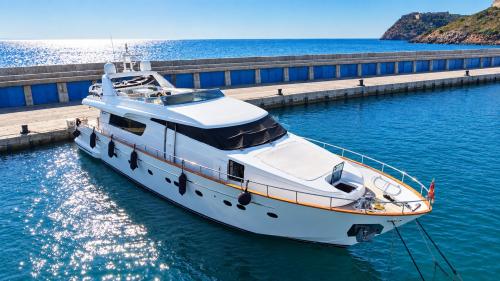
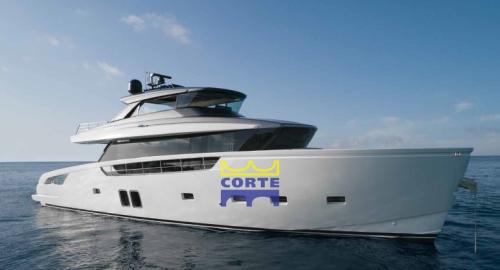
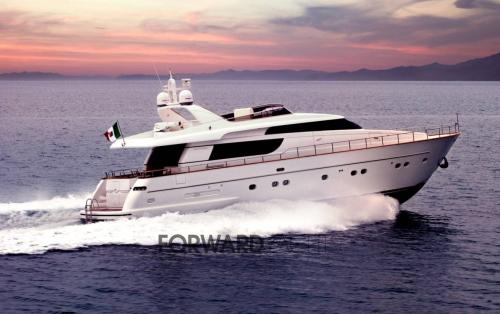
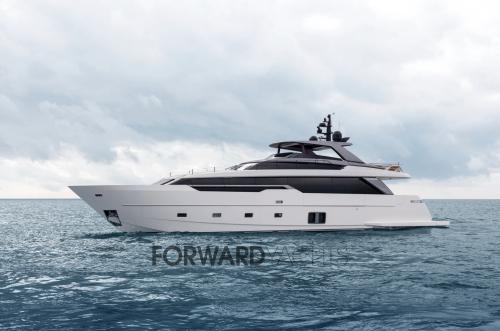

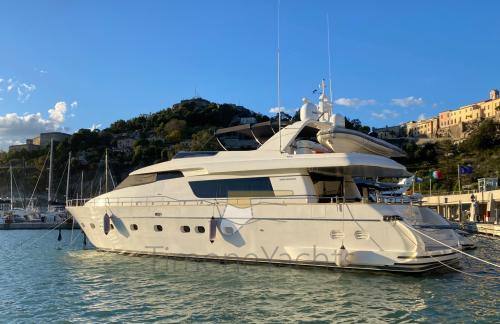
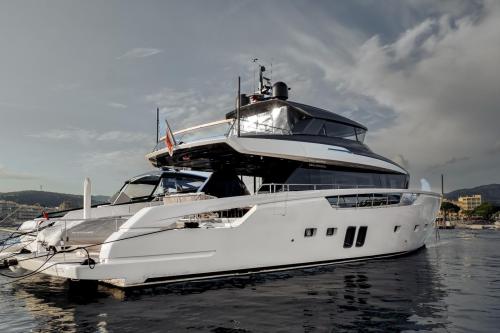
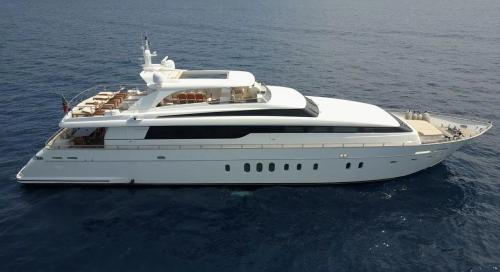
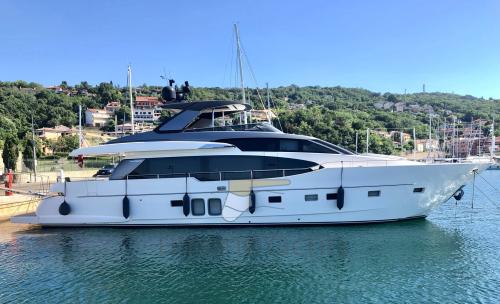
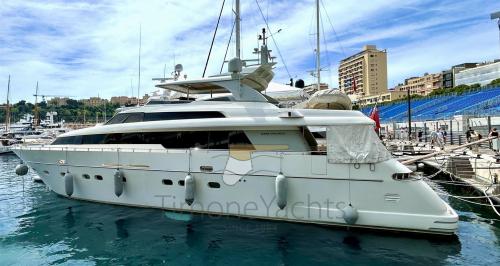
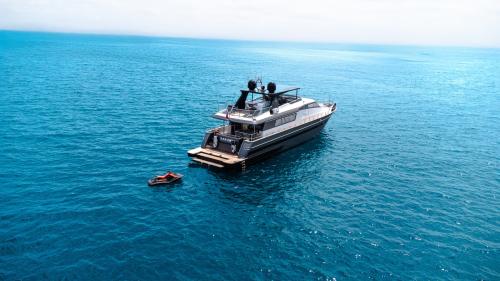
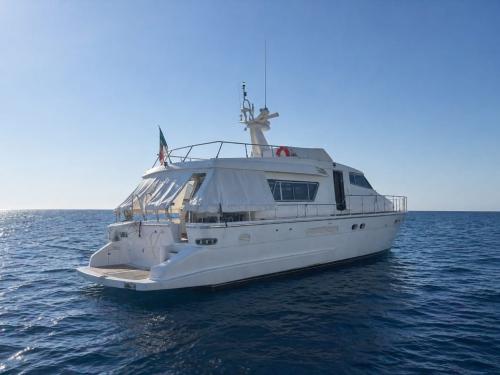
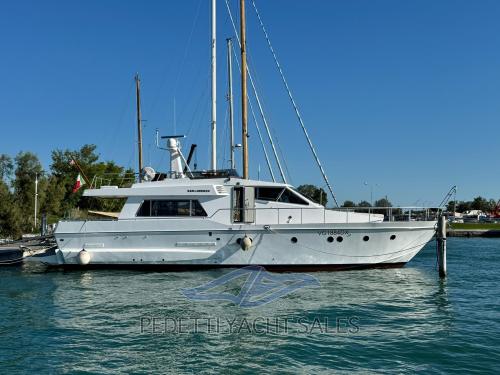
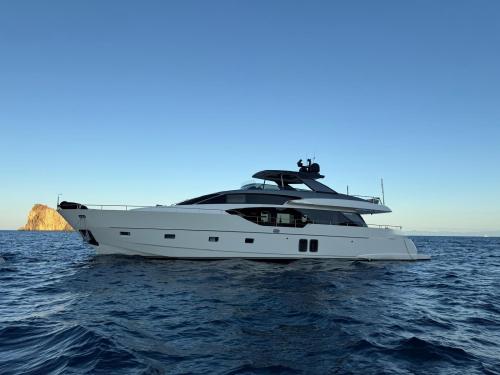

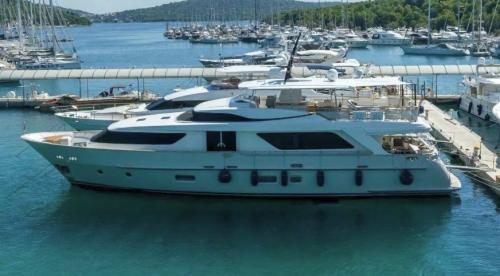


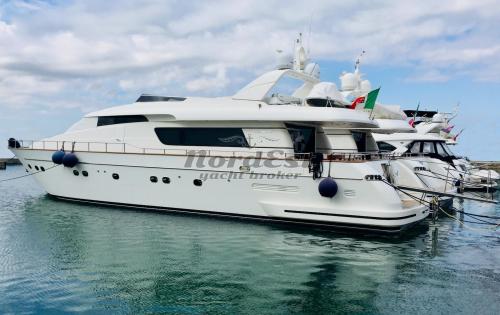
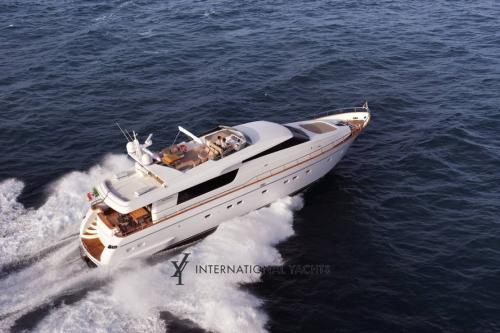


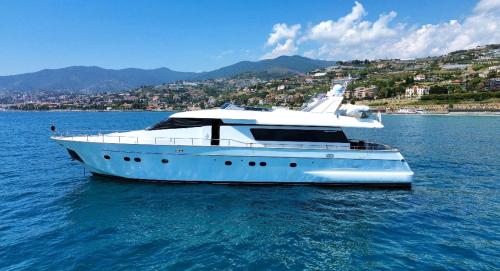



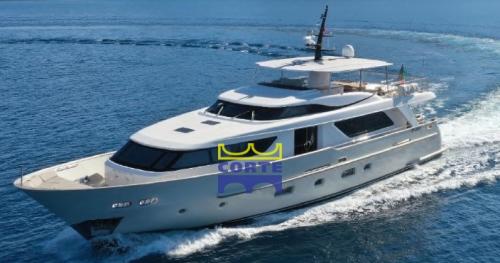
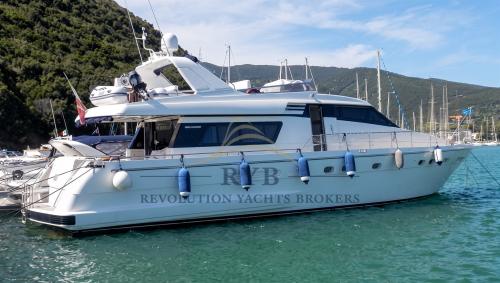
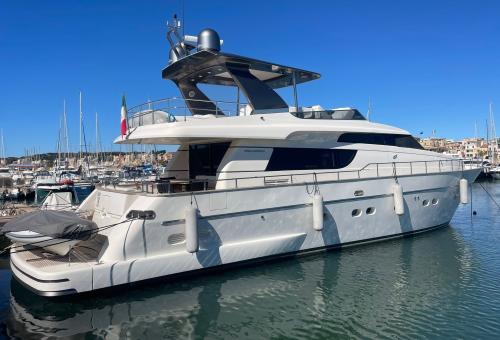
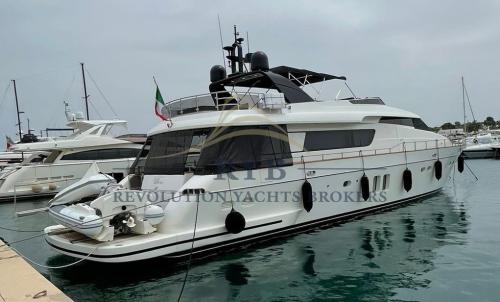
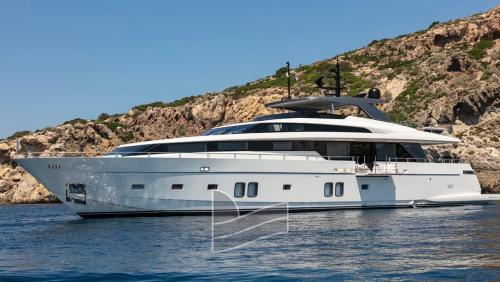
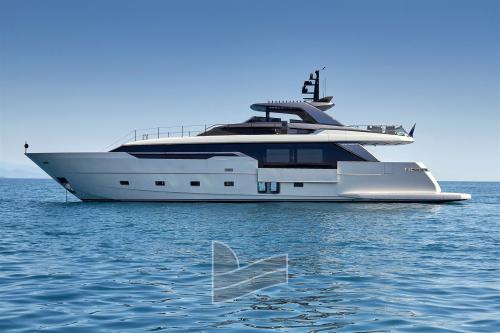
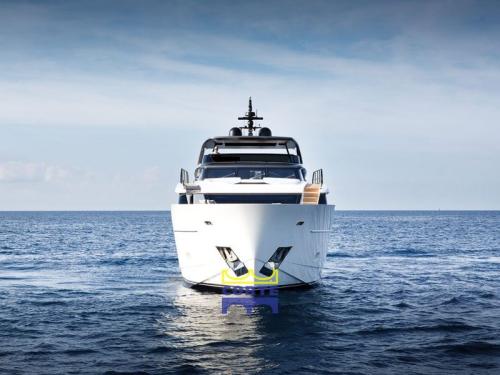

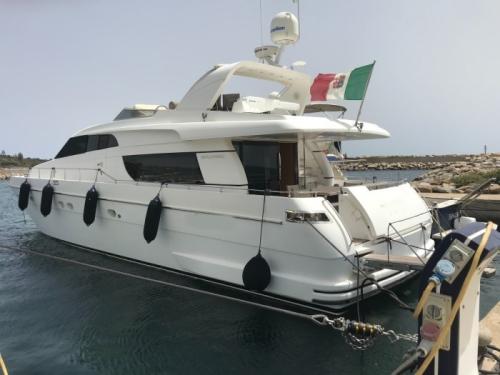

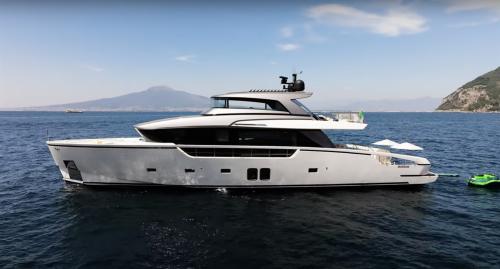
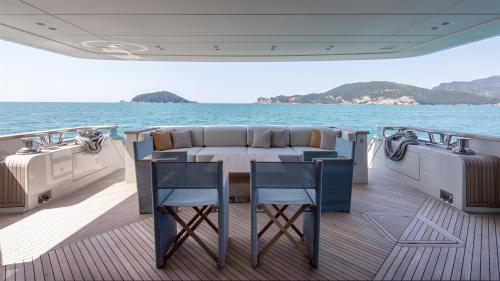
Yachting Address Review — Sanlorenzo: the yard that turned bespoke building into an industrial philosophy
Sanlorenzo is not a yard that mass-produces yachts with options. It is a yard that produces a limited number of units per year, where each hull can diverge from its production sister in interior layout, materials and sometimes even architecture. The brand's official slogan — "nothing is like your Sanlorenzo yacht, not even another Sanlorenzo" — is not empty marketing copy. It is the exact description of a business model that has made Sanlorenzo the second-largest superyacht builder worldwide by volume, according to Boat International's Global Order Book ranking.
The Sanlorenzo second-hand market on this page spans an impressive spectrum — from €89,000 for a 1988 model of 17 metres to over €9.6 million for a recent SL106A, with several superyachts at price on request beyond 35 metres. This is the catalogue of a yard operating simultaneously in the accessible second-hand yacht market and the new-build superyacht market worth tens of millions of euros.
From Florence to Ameglia: the history of a yard that changed face three times
Sanlorenzo was founded in 1958 near Florence by Gianfranco Cecchi and Giuliano Pecchia — a small yard with no particular ambition at first. In 1972, Giovanni Jannetti took over the structure and moved it to Viareggio, the historic heart of Italian boatbuilding. Through these first decades, Sanlorenzo built exclusively in wood.
The industrial turning point came in 1985 with the launch of the SL57, the first Sanlorenzo yacht in laminated polyester (GRP). Ten years later, in 1995, the SL100 firmly established the brand in the superyacht category. In 1999, the yard opened a second site in Ameglia, in the province of La Spezia, within a nature reserve on the Magra river — a location choice that says something about the brand's philosophy, as concerned with image as with production.
In 2005, Massimo Perotti — former managing director of Azimut-Benetti — became majority shareholder and renamed the company Sanlorenzo SpA. Under his leadership, revenue grew from €40 million in 2004 to over €700 million today. In 2007, a second site opened in Viareggio to produce new metal lines — aluminium and steel — for the largest superyachts. In 2016, the La Spezia site was acquired to reinforce superyacht construction capacity. The group is now listed on the Milan Stock Exchange.
The Sanlorenzo lines: understanding SL, SD and SX before comparing anything
The Sanlorenzo catalogue is structured into several distinct families — and understanding this architecture is the prerequisite for any serious reading of listings.
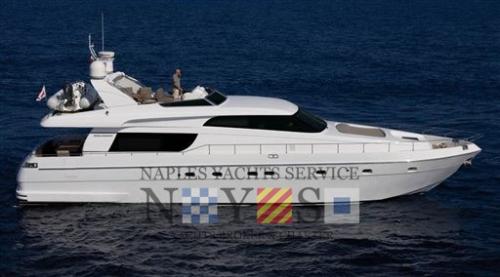
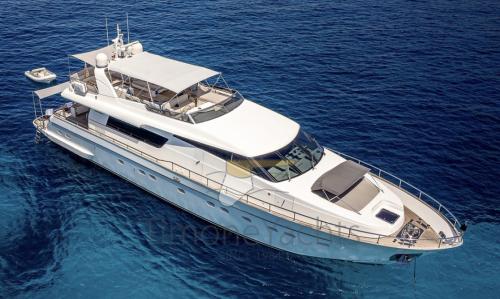
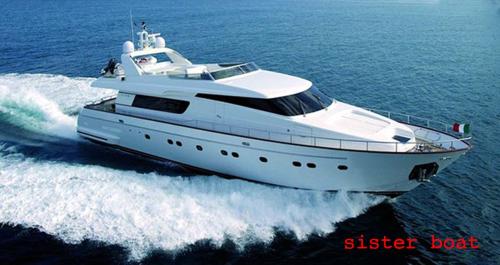
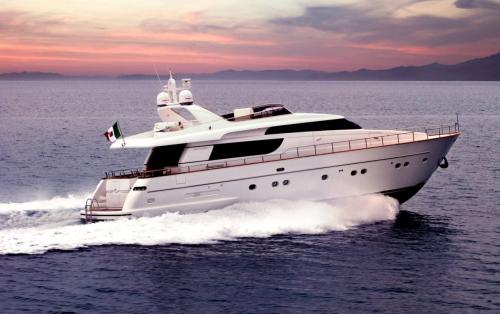
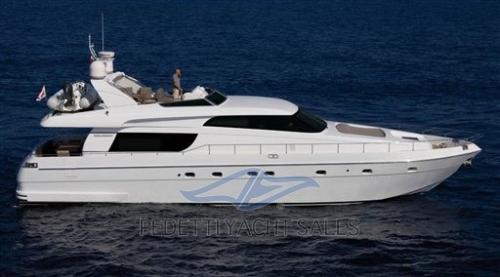
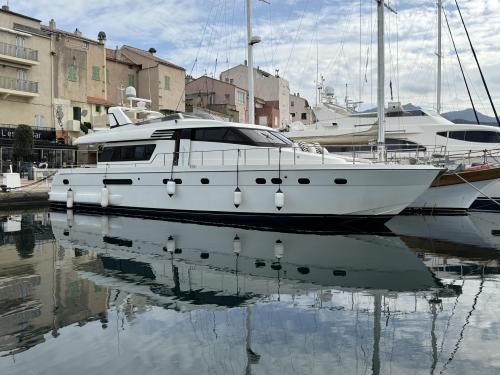
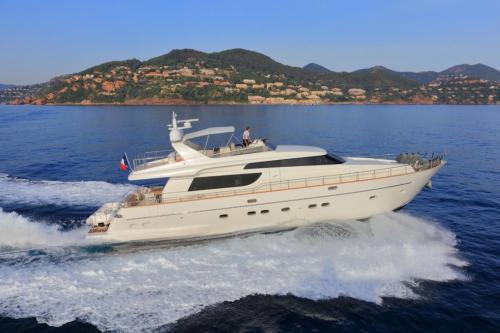
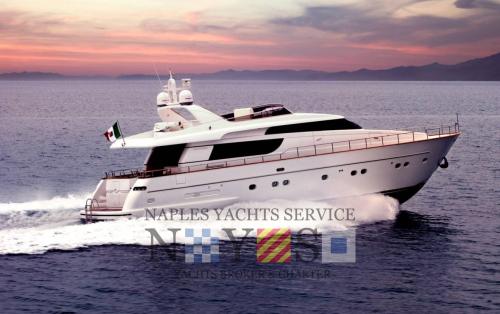
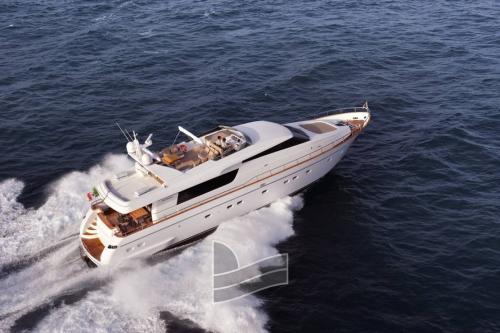
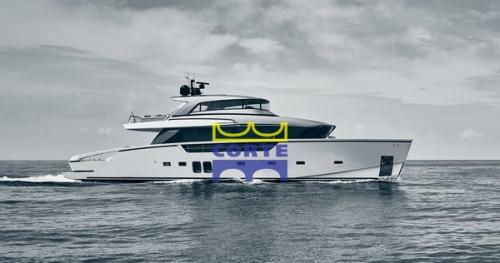
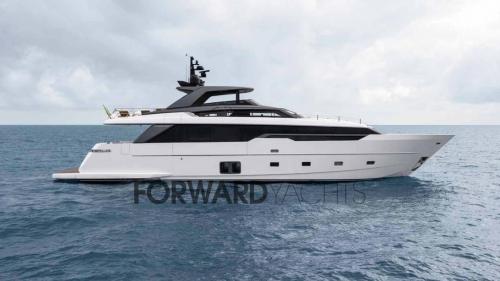
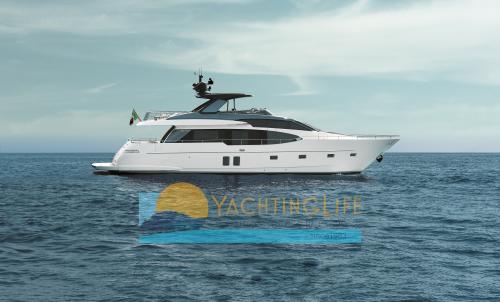
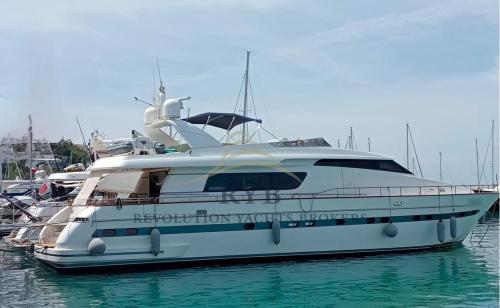
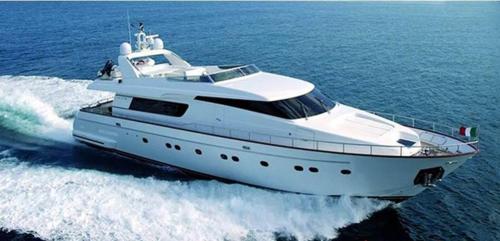
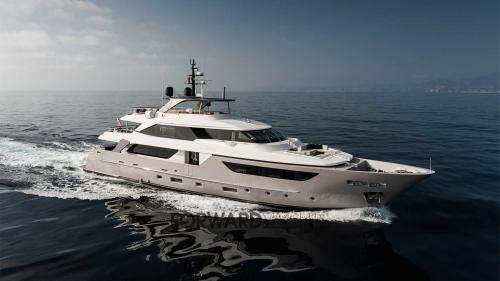
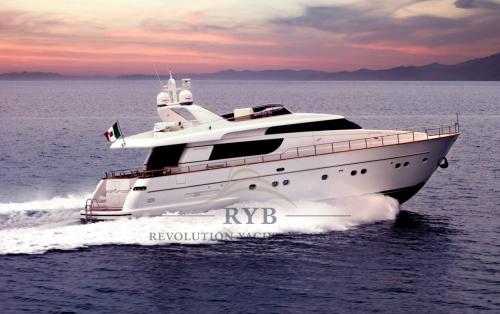
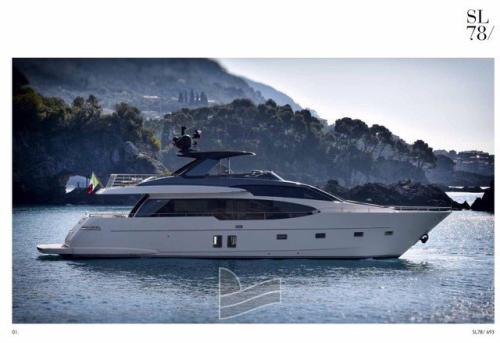
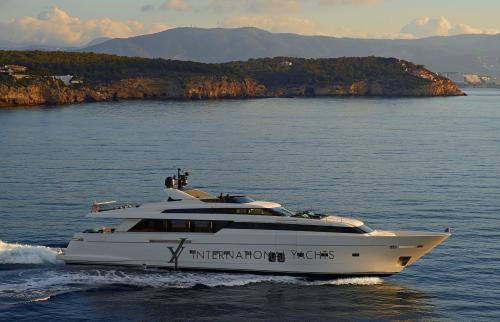
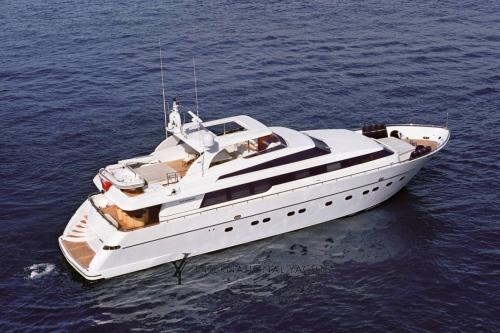
The SL line is the historic range of planing-hull yachts in laminated polyester, from approximately 24 to 37 metres. This is the most represented line on the second-hand market — SL62, SL72, SL82, SL86, SL88, SL94, SL96, SL102, SL106, SL108, SL118. These are fast yachts with a traditional flybridge silhouette, designed for coastal navigation and active Mediterranean cruising.
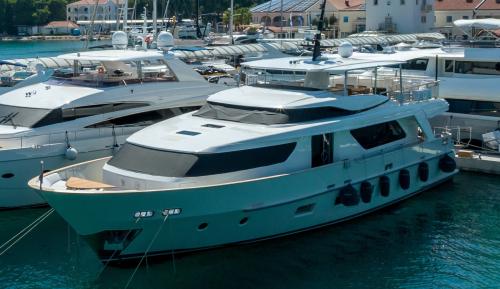
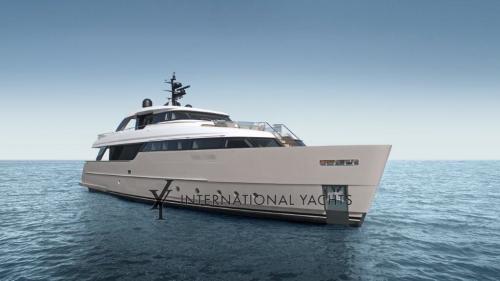
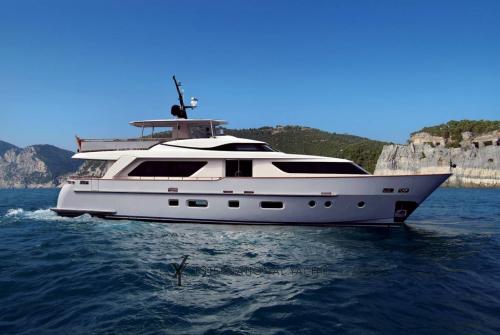
The SD line ("Sanlorenzo Displacement") groups the semi-displacement navettas — yachts whose lines explicitly draw on 1930s transatlantic liners. Also built in polyester, the SD92 (now SD96), SD112 and SD126 prioritise range and long-distance cruising comfort over pure speed — an economical 10-knot cruise can achieve 1,600 to 2,500 nautical miles depending on the model, against a top speed of 17 to 20 knots.
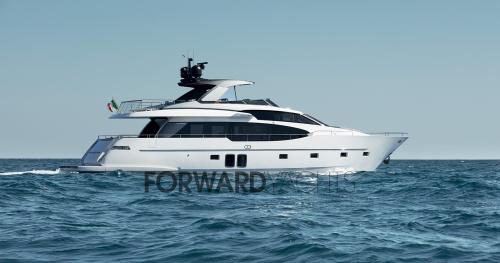
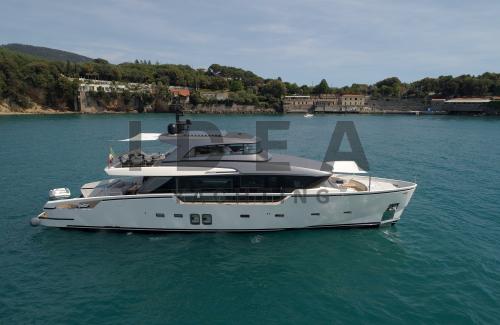
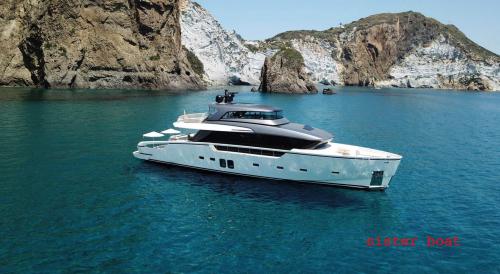
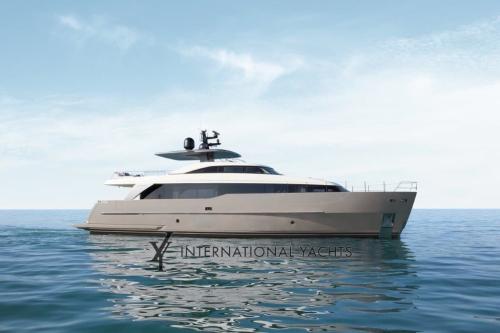
The SX line is the most recent of the three main families, launched in 2017-2018 with the SX88 then the SX76 (followed by the SX100 and SX112). It is a "crossover" concept — the synthesis between a classic flybridge motoryacht and an explorer — designed to attract a younger, more outdoor-living-oriented clientele. The SX88 was the first production yacht to literally open its aft deck onto a vast beach club, an innovation since widely copied by competitors, Sunseeker foremost with its 88 Yacht.
Beyond these three composite lines, Sanlorenzo also produces metal ranges — Alloy (aluminium, fast displacement hulls), Steel (large interior volumes) and Explorer (steel hull, aluminium superstructure, launched in 2015) — for superyachts of 40 metres and above, built in Viareggio and La Spezia. The group also owns the Bluegame brand, dedicated to "Sport Utility Yachts" of 13 to 21 metres — a sportier, more accessible range, distinct from the classic Sanlorenzo identity.
Why some listings say "Sanlorenzo 82" and others say "SL 82"
This is the most frequent confusion for anyone discovering the Sanlorenzo second-hand market, and it has a precise historical explanation.
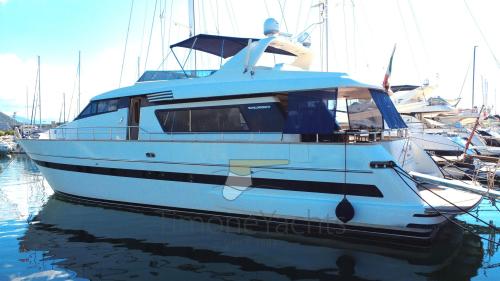
Before the mid-2000s, Sanlorenzo simply named its models by their size in feet — "Sanlorenzo 62", "Sanlorenzo 72", "Sanlorenzo 82". From approximately 2007, the yard generalised the line prefix (SL, SD, SX) across its entire nomenclature, in line with structuring its range into distinct families. The "82" or "72" models did not disappear — they were simply renamed "SL82" and "SL72" for newly produced units, while older examples retain their original designation in resale listings.
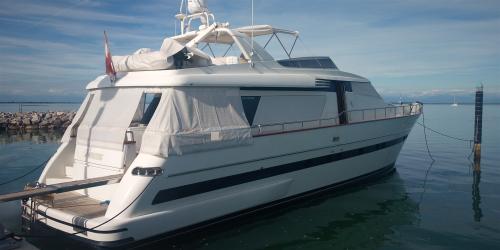
In practice, a 1998 "Sanlorenzo 82" and a 2009 "SL 82" belong to the same model family, with engine, interior design and sometimes length evolutions across successive series — but this is not a numbering coincidence; it is the same lineage told across two different eras of the yard's nomenclature.
The Asymmetric revolution: the innovation that changed perceptions of the flybridge
This is the most significant innovation of Sanlorenzo's last decade, and the one deserving the most detailed explanation for a buyer who encounters the "A" suffix in a listing (SL90A, SL96A, SL102A, SL120A).
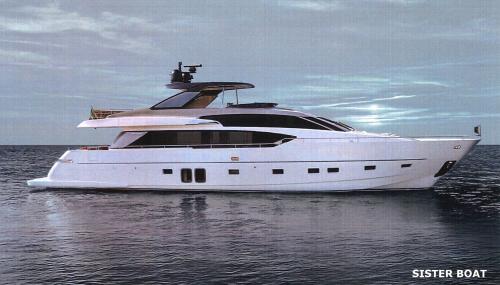
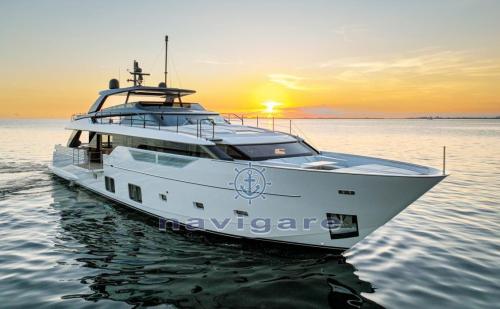
The Asymmetric concept, introduced in 2018 with the SL102A, removes the side deck on one side of the boat (typically port) to transfer that space into the main saloon. The result: a saloon enlarged by 25 to 30% compared to a symmetrical yacht of the same size, full-height glazing facing directly onto the sea on one side, and a layout that often places the owner's cabin at main deck level — a configuration normally reserved for much larger yachts.
This architecture results from a collaboration between the Italian studio Zuccon International Project for exterior lines and American automotive designer Chris Bangle — former BMW design director — for certain aspects of the silhouette. The formula's success led Sanlorenzo to extend it across several sizes: SL90A, SL96A, SL102A and SL120A now coexist in the range. On the second-hand market, an "A" model in a comparable size generally trades at a premium over the symmetrical equivalent, due to the relative scarcity of these early generations and clientele enthusiasm for the concept.
What the second-hand market reveals about Sanlorenzo's value
Sanlorenzo benefits from one of the strongest resale values in the superyacht segment — a direct consequence of its limited production philosophy. The yard does not produce several hundred units per model; large SL and SD series typically number in the dozens of units over their entire production run. This relative scarcity, combined with the brand's reputation for build quality, sustains resale prices that hold up better over time than those of more industrially-produced brands.
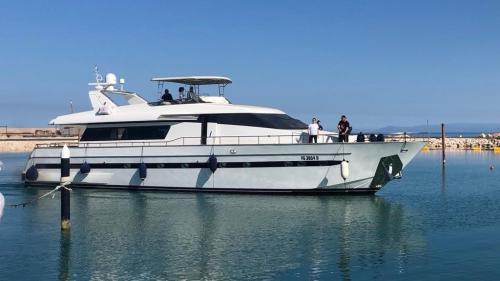
Historic entry-level models (SL57, Sanlorenzo 62, early SL62) constitute the most affordable access to the brand on the second-hand market — 17-19-metre yachts built in the 1990s-2000s, whose prices can fall below €150,000 for the oldest examples requiring a refit. Intermediate series (SL72, SL82, SL86, SL88) cover the market core between €600,000 and €4-5 million depending on model year and condition. Large units (SD92/96, SL96A, SL106, SL118, and metal models beyond 35-40 metres) range from several million to several tens of millions of euros, where price on request becomes the norm.
What to check when buying a second-hand Sanlorenzo
Customisation documentation is the first instinct to have with a semi-custom yard. Every Sanlorenzo can differ from its standard series — interior materials, cabin configuration, electronics, stabilisation. Always request the original build sheet from the yard or local Sanlorenzo agent to know exactly which options the first owner chose.
Powertrain varies by model and year — MTU, MAN or Caterpillar depending on configuration, single or twin shaft drive depending on size. On large units, an engine diagnostic by a certified technician of the relevant brand is essential before any serious negotiation, with hour readings and position relative to major overhaul thresholds.
Stabilisation systems — present on virtually all Sanlorenzo models over 20 metres — deserve specific verification: gyroscopic or fin stabilisers depending on generation, with significant maintenance and overhaul costs on large units.
Composite vs metal hull depending on line and size — the SL, SD and SX lines are laminated polyester (GRP), while the Alloy, Steel and Explorer superyachts beyond 40 metres are aluminium or steel. Inspection points differ fundamentally: osmosis and delamination for composite, corrosion and plate thickness for metal.
Service history with official Sanlorenzo agents — the brand's service network is dense across the Mediterranean (Italy, Côte d'Azur, Spain), and traceability of work through this network is a much stronger reliability guarantee than informal maintenance, particularly on units over 15 years old.
Sanlorenzo against real competitors
On the SL line, the natural competitors are Ferretti Custom Line and Azimut Grande — Italian flybridges of similar standing. Sanlorenzo generally stands out through a superior level of customisation and more limited production.
On the SD line, the comparison is with Benetti and CRN navettas — builders sharing the same long-range, moderate-speed cruising philosophy.
On the SX line, the most direct competitor has become the Sunseeker 88 Yacht, launched explicitly in response to the SX88's success — proof, in Massimo Perotti's own 2018 words, that "many copies will follow" the Sanlorenzo crossover concept.
Sanlorenzo market prices in 2025-2026
| Line / Size | Generation | Indicative price |
|---|---|---|
| SL57 / Sanlorenzo 57-62 (17-19 m) | 1985-2000 | €89,000 – €320,000 incl. VAT |
| SL62 / SL72 (18-22 m) | 1994-2011 | €320,000 – €950,000 incl. VAT |
| SL82 / SL86 / SL88 (24-27 m) | 1998-2019 | €600,000 – €4,600,000 incl. VAT |
| SL94 / SL96 / SL96A (28-29 m) | 2013-2024 | €2,950,000 – €6,900,000 incl. VAT |
| SD92 / SD96 (27-28 m) | 2007-2024 | €2,500,000 – €7,900,000 ex-VAT |
| SX76 / SX88 (24-27 m) | 2017-2024 | €3,980,000 – €6,900,000 ex-VAT |
| SL102-120A / SL106-118 / SD126 and metal superyachts | 2013-2025 | €7,000,000 and above — price on request |
Indicative ranges, market May 2026. VAT included unless otherwise stated. The level of customisation and scarcity of each unit can significantly affect these ranges.
Our verdict
Sanlorenzo has built a unique model in the luxury yacht industry: producing at the scale of a major industrial yard while preserving the exclusivity of semi-custom production where each unit tells the story of its original owner's choices. This philosophy comes at a price when new, but it protects value second-hand — the relative scarcity of each model and the strength of the brand's reputation sustain resale prices that hold up better than those of more industrial production. The serious buyer of a second-hand Sanlorenzo must above all understand which line and generation they are dealing with, demand the original customisation documentation, and verify service history with the official network — three conditions that turn a purchase of several hundred thousand to several million euros into a genuinely informed decision.