

Hanse Yachts for sale
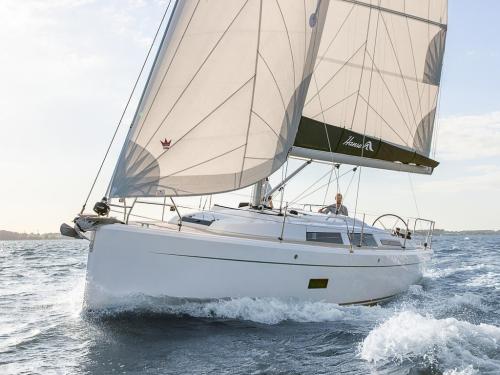
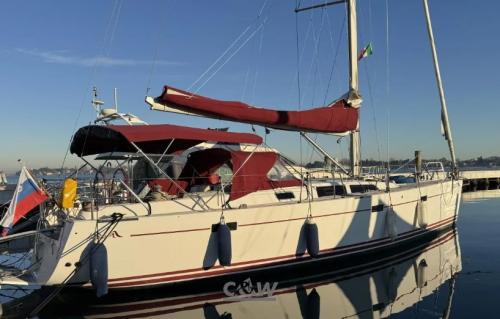
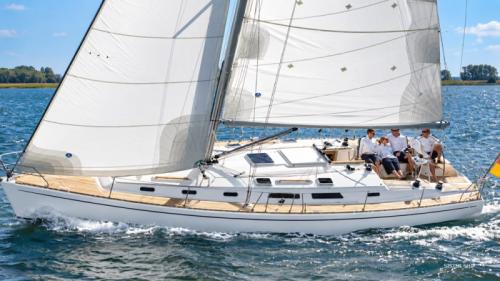
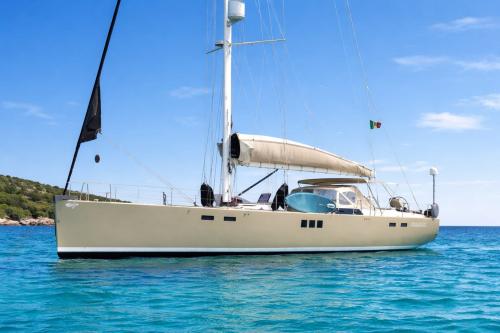
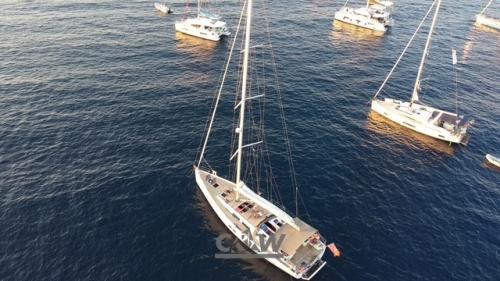
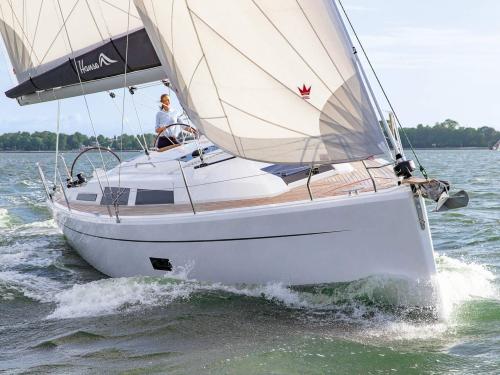
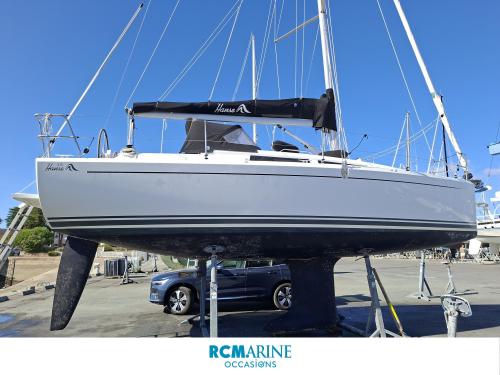
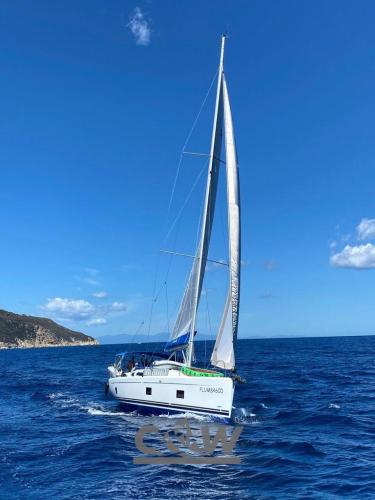
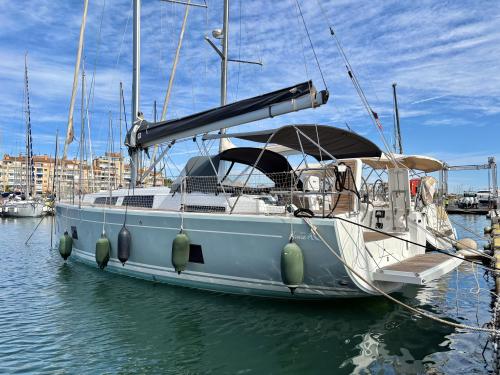
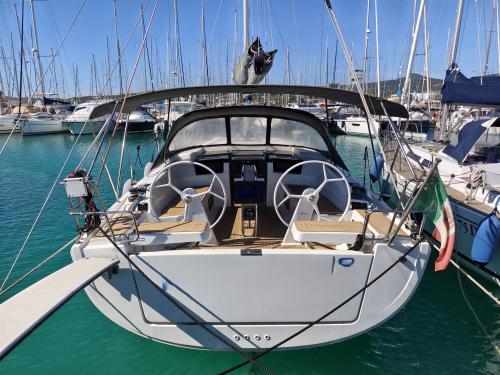
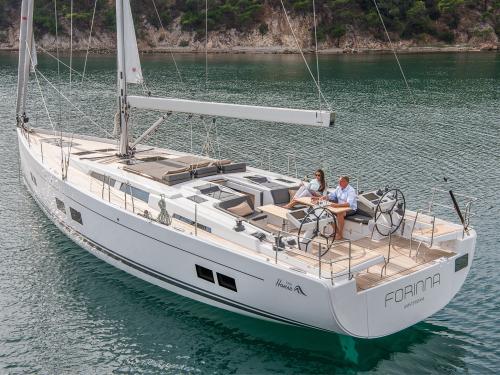
hanse hanse 588
390 000€ All Tax IncludedUsed
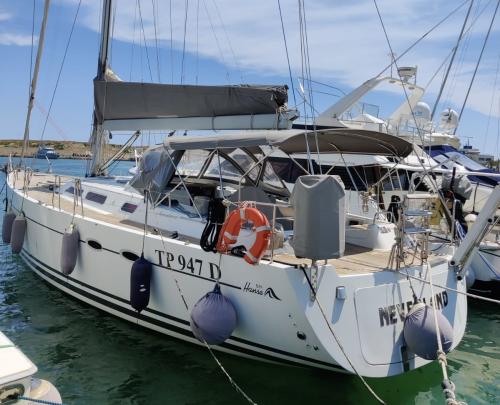
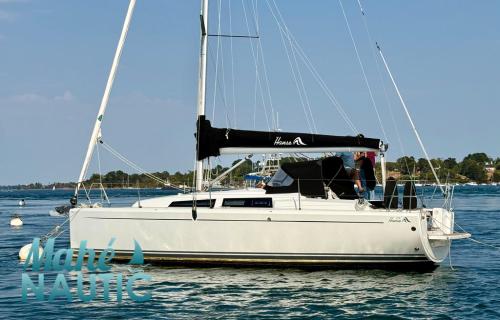
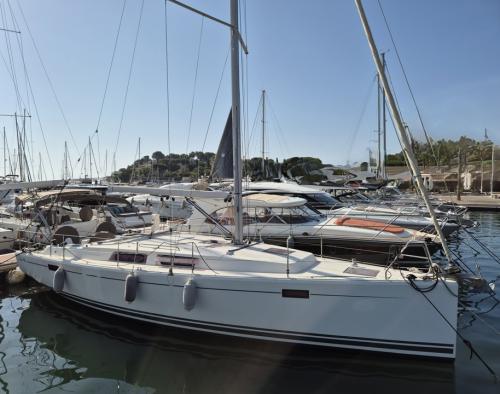
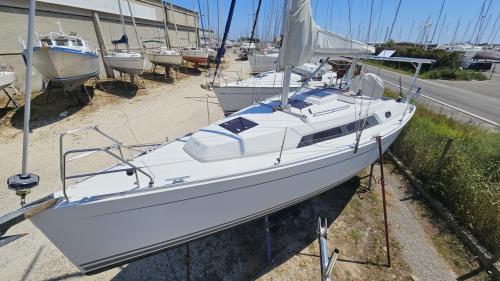
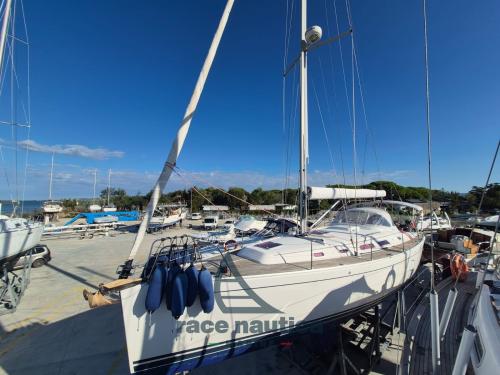
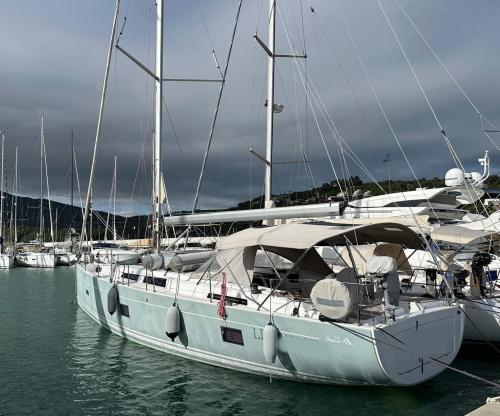
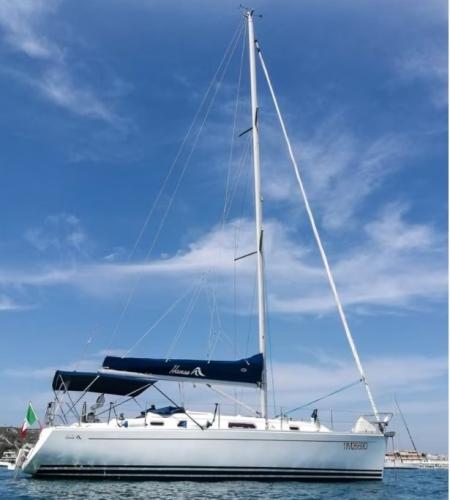
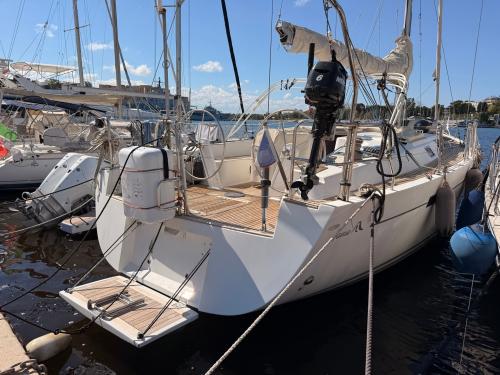
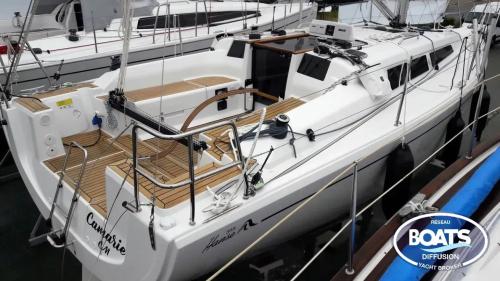
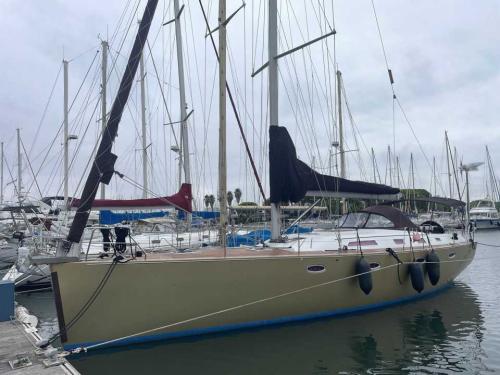
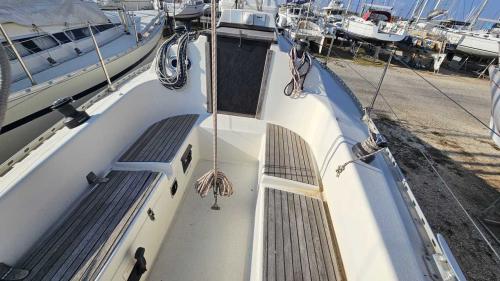
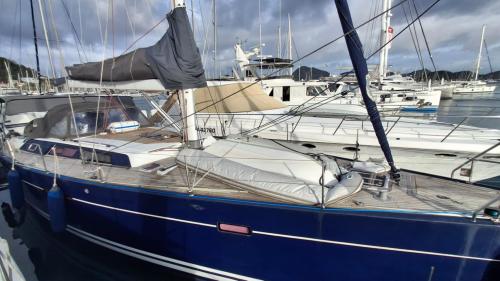
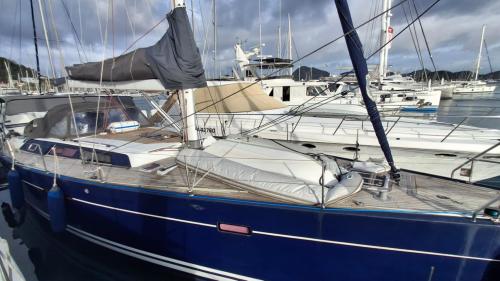
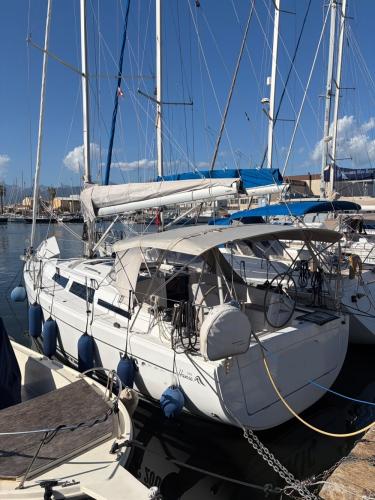
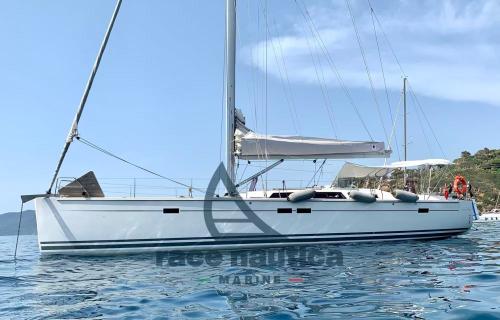
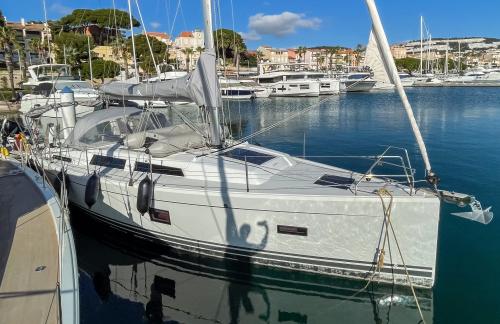
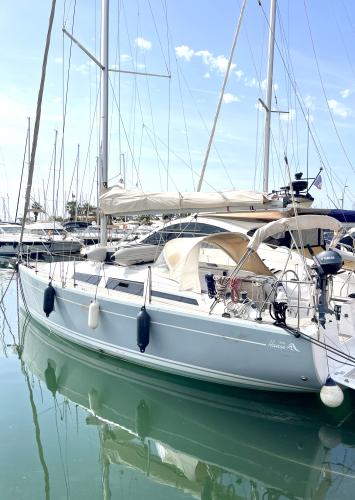
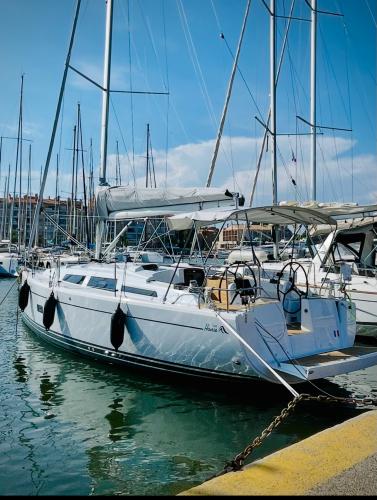
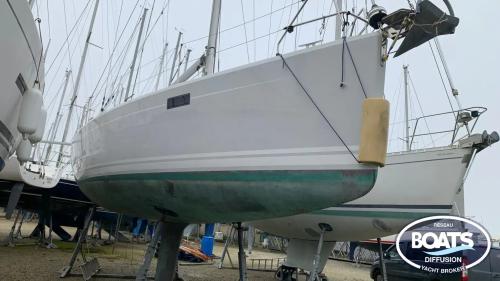
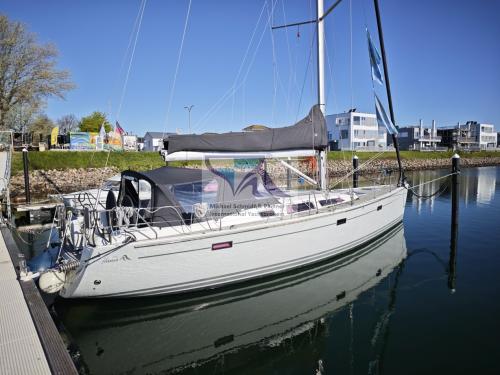
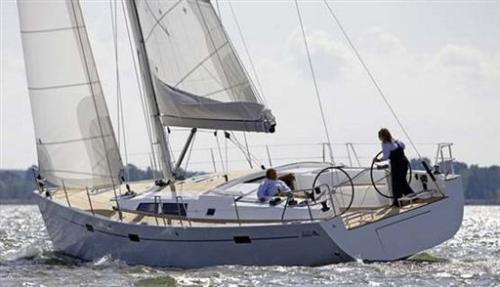

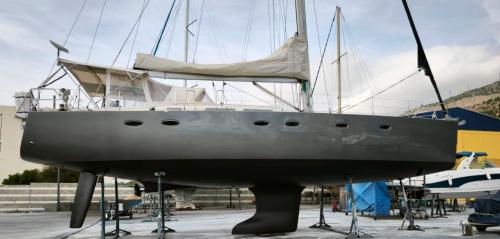
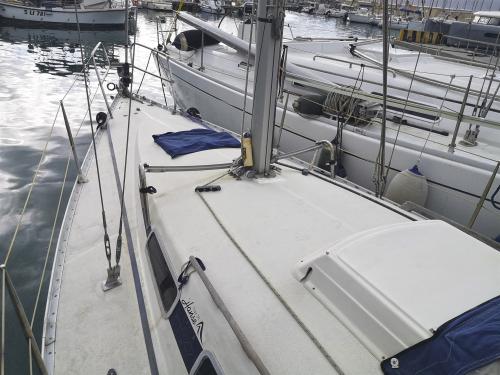
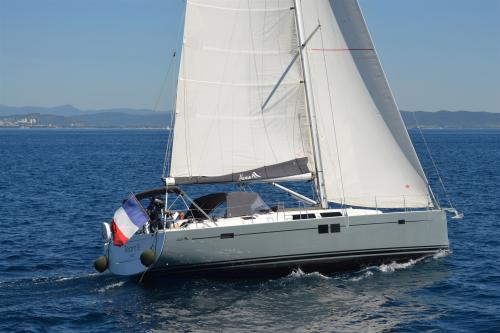
hanse hanse 505
283 000€ excluding taxUsed
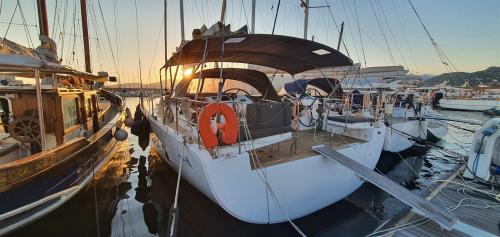
hanse hanse 588
500 000€ All Tax IncludedUsed
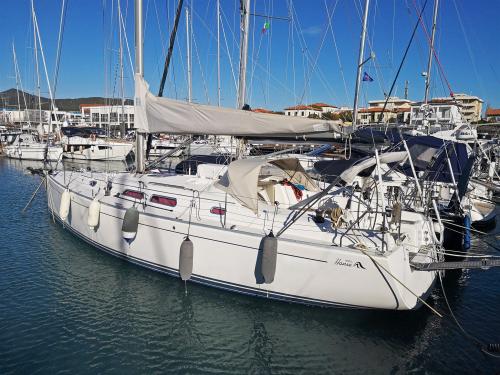
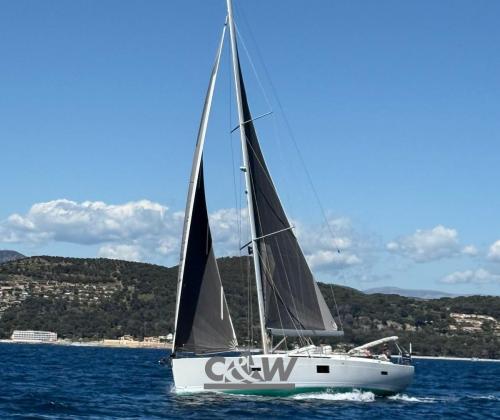
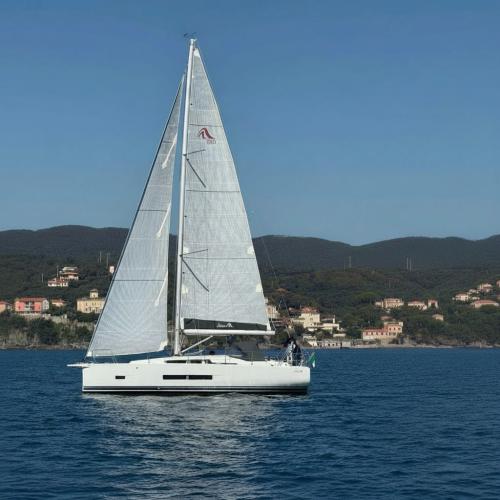

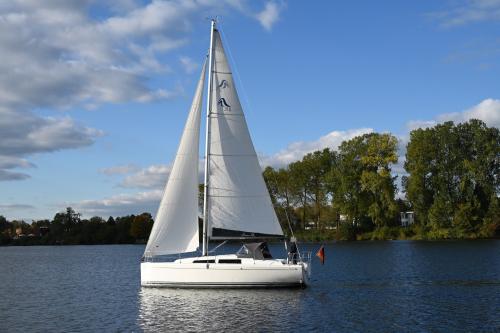
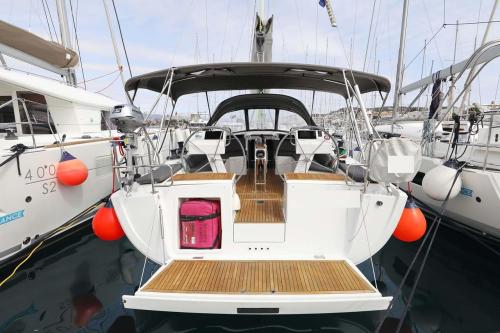
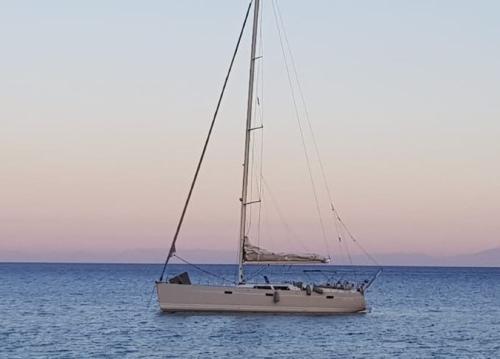
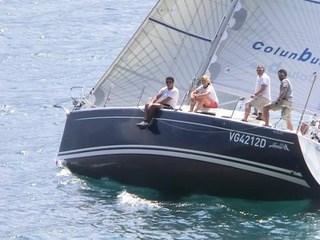
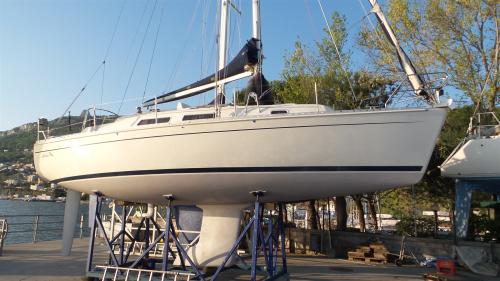
Yachting Address Review — Hanse Yachts: the yard born in a Soviet trawler factory that became Europe's leading sailing yacht builder
In 1990, Michael Schmidt bought a shipyard in Greifswald, in the former East Germany, which had been building trawlers for the Soviet fishing fleet until reunification. It is in these industrial halls in Mecklenburg-Vorpommern, freed by the fall of the Iron Curtain, that Hanse Yachts was born — a name that would become in thirty years one of the three largest production sailing yacht builders in the world. Over 55,000 yachts produced, a stock market listing in Frankfurt in 2007, and a range today spanning from 31 to 67 feet. Few yards can tell such a singular founding story.
judel/vrolijk & co: the architect not always associated with the Hanse name
Hanse's architectural signature since its origins is the firm judel/vrolijk & co — a Bremen-based naval architecture office whose name is not as widely known to the general public as Finot-Conq or Marc Lombard, but whose track record is at least as impressive. Rolf Vrolijk has drawn several America's Cup boats, including the TP52 for the Spanish team, and racer-cruisers that have accumulated victories in European offshore racing. This performance culture permeates every Hanse hull from the first model.
What it produces in practice: boats that point creditably to windward for large-production cruising yachts, with frank transverse stability and healthy behaviour in coastal chop. On a Hanse 388 or Hanse 418, a sailor coming from a Bavaria or Bénéteau of equivalent size generally notices the difference upwind within the first hour.
Hanse nomenclature: thirty years of numbers, two major transitions
Reading a Hanse second-hand catalogue without understanding the evolution of its nomenclature risks comparing boats that have little in common despite close numbers.
The first generation (approximately 1990-2010) uses three-digit numbers that approximately correspond to length in decimetres: the Hanse 291 is 8.90 m, the Hanse 342 is 10.30 m, the Hanse 371 is 11.25 m. The suffix "e" on certain models — Hanse 400e, Hanse 470e, Hanse 531e, Hanse 540e, Hanse 630e — designates an "evolution" version: a substantial update of the preceding model, with new exterior lines, a redesigned interior, sometimes a different powertrain. It is not a distinct model — it is the same family improved.
The second generation (2010-2018) changes conventions: numbers no longer correspond exactly to size but to a range sequence — Hanse 315, 348, 385, 388, 418, 455, 458, 505, 548, 588. These boats are often slightly larger than their numbers suggest.
The third generation (from approximately 2018-2020) further refines the range with new models filling the gaps: Hanse 360, 410, 460, 510, 675. This is the current range, with more contemporary lines and brighter interior layouts.
In practice: a 2007 Hanse 400e and a 2019 Hanse 418 are very different boats despite similar lengths (11.99 m). The first belongs to the pre-redesign era; the second to the contemporary generation.
The Hanse deck philosophy: everything for short-handed sailing
There is a consistent thread through all Hanse yachts regardless of size: the deck is organised so a two-person crew can handle everything without unnecessary movement. Furling genoa, sheets and halyards led aft to the cockpit, symmetrical twin-helm organisation — this is the same principle that Jeanneau developed on the Sun Odyssey 440, but applied at Hanse since the mid-1990s.
The large side windows and generous deck hatches are the other immediately recognisable visual signature: a Hanse offers considerably more natural light below for its size category, with a sober, functional interior aesthetic that has aged better than some heavier-timbered contemporaries.
The Hanse Group: Hanse is not alone in its family
Hanse Yachts AG is the parent company of a group of complementary brands. Dehler covers the racing and semi-racing end — sportier, finer boats for performance-focused sailors. Moody is the group's historic British brand, oriented toward comfortable long-range cruising. Varianta is the accessible entry-level range, less expensive, for first-time buyers.
This group organisation explains why Hanse can concentrate on a precise positioning — the performance family cruising yacht — without dispersing its identity across too broad a spectrum.
What the second-hand market reveals about Hanse
This page's catalogue depicts one of the most active and geographically diverse second-hand markets on the site — listings in Italy, Germany, France, Croatia, Greece, the Netherlands, Turkey and as far as Martinique. This reflects a sailing yacht that navigates on all seas and that its owners take far.
Hanse depreciation is regular and fairly predictable: a 2022 Hanse 388 at €209,500 incl. VAT and a 2024 Hanse 388 at €250,000 incl. VAT illustrate depreciation of 15-20% over two years — comparable to equivalent French production series. Older models (Hanse 371, 400, 400e) between €65,000 and €115,000 for 2001-2009 examples represent accessible brand entry at controlled budget, with the well-regarded robustness of German construction.
Hanse against direct competitors
Against the Bénéteau Océanis, Hanse typically offers better windward performance, at the cost of interiors perceived as slightly less "enveloping" than the Nauta Design-signed Océanis. The Bénéteau service network is denser in France; the Hanse network is denser in Germany and Northern Europe.
Against Bavaria Cruiser, Hanse is generally more expensive for the same size, but the finish level and judel/vrolijk hull justify this premium for the buyer who sails intensively.
Against the Jeanneau Sun Odyssey, the comparison is most nuanced: two similar sailing philosophies (short-handed crew, ergonomic cockpit) but very different brand identities. Hanse is perceived as more "Nordic" and more robust; Jeanneau as more accessible and better distributed in France.
What to check when buying second-hand
Yanmar or Volvo SailDrive depending on generation — same vigilance point as on all production sailing yachts. On 2005-2015 Hanse models now 10-20 years old, verify bellows replacement with date and invoice. The oldest models (pre-2005) may have shaft-drive diesel transmissions — verify the transmission type during viewing.
The "e" suffix on older models — a Hanse 400 and a Hanse 400e are not the same boat. The "e" version has real architectural differences (transom, cockpit, interior layout). Verify the exact designation on the registration documents before any price comparison.
Lateral hull windows — the large lateral openings that give Hanse yachts their brightness are also the first watertightness inspection point. On 10-15-year-old examples, side window seals deserve careful inspection; water ingress at this point can generate moisture in the berths.
Standing rigging — Hanse uses standard stainless steel cable shrouds. On examples over 12-15 years old, a complete standing rigging inspection (cables, turnbuckles, chainplates) is strongly recommended before any offshore sailing.
Hanse market prices in 2025-2026
| Model / Size | Generation | Indicative price |
|---|---|---|
| Hanse 291-320 (8.9-9.7 m) | 1996-2008 | €19,000 – €60,000 incl. VAT |
| Hanse 342-371 (10.3-11.3 m) | 2001-2007 | €55,000 – €85,000 incl. VAT |
| Hanse 315-348 (9.1-10.0 m) | 2018-2022 | €89,000 – €165,000 incl. VAT |
| Hanse 385-418 (11.0-12.0 m) | 2013-2024 | €130,000 – €265,000 incl. VAT |
| Hanse 400-461 older (12.0-14.2 m) | 2003-2011 | €95,000 – €170,000 incl. VAT |
| Hanse 455-505 (13.5-14.9 m) | 2015-2020 | €200,000 – €290,000 ex-VAT |
| Hanse 531-540e (16.0-16.2 m) | 2004-2009 | €225,000 – €300,000 incl. VAT |
| Hanse 588-630e (17.0-19.0 m) | 2009-2018 | €450,000 – €650,000 incl. VAT |
Indicative ranges, market May 2026. VAT included unless otherwise stated.
Our verdict
Hanse is the choice for the sailor who wants a yacht that sails seriously, is built solidly, with a hull that does not lie on the water. The depth of the second-hand catalogue — models from 1996 to 2024 across two pages — is the sign of an active market and demand that does not dry up. The complex nomenclature is the only real trap when buying: taking the time to verify exactly which model and which generation you are viewing avoids the majority of unpleasant surprises. For new purchases, the Hanse dealer network is the right entry point to try the current range before committing.
Hanse Yachts Models
Hanse 460
Hanse 548
Hanse 348
Hanse 315
Hanse 385
Hanse 508
Hanse 575