

Beneteau Oceanis 30.1 for sale
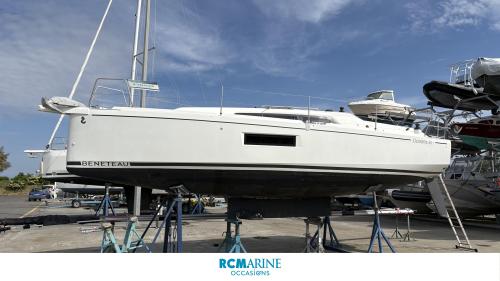

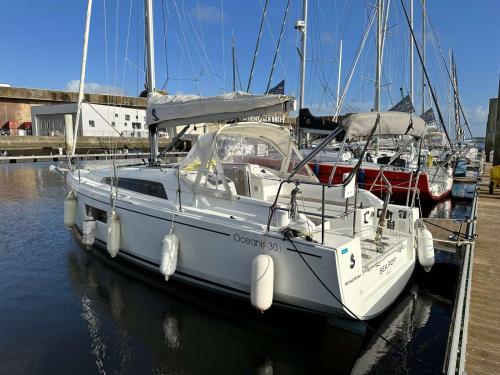
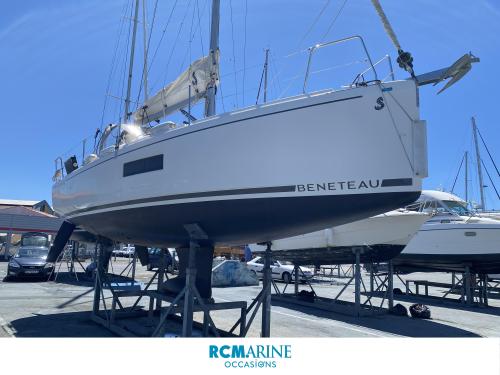
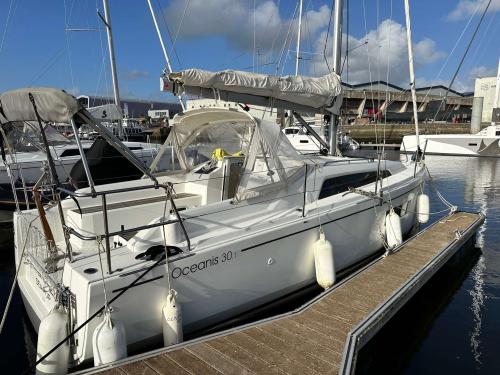
Yachting Address Review — Bénéteau Océanis 30.1: the 9-metre sailboat with big yacht features
The Océanis 30.1 is an apparent contradiction: a 9-metre sailboat with the characteristics of a large yacht. Twin wheels, Finot-Conq hull, CE B offshore certification, electric propulsion option — this is the specification you would expect on an 11-12-metre boat, offered in a format that fits on a road trailer without an oversized load permit. Bénéteau has made a coherent bet: that buyers who cannot afford a 12-metre yacht nonetheless deserve the nautical qualities and sailing experience of a large boat.
Finot-Conq: the signature's coherence
The Océanis 30.1's hull is signed by Finot-Conq — the same La Rochelle studio that signs the Océanis 45 hull. This signature coherence across the Bénéteau range is not coincidental: Finot-Conq brings to every size it draws the same philosophy — fine waterlines, a hull that points creditably to windward, healthy behaviour in rough conditions.
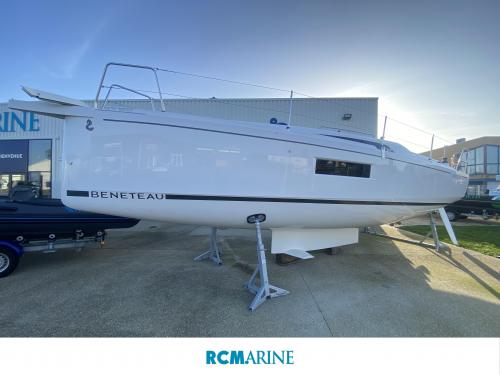
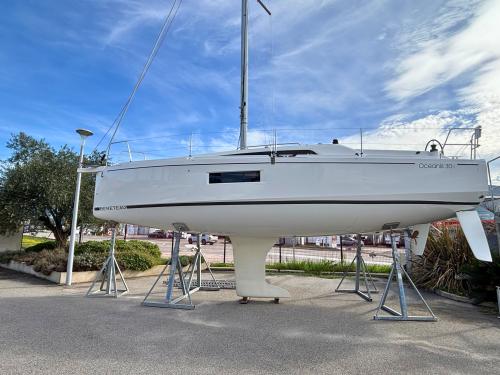
On a 9-metre boat, this signature makes a significant difference. Most sailing yachts of this category are drawn with voluminous, wide hulls to maximise habitability — at the expense of nautical behaviour. The 30.1 chooses the other path: a finer hull, hard chines, taut lines that give it sea behaviour that competitors do not consistently offer in this size.
Twin wheels on 9 metres: a genuine luxury in the category
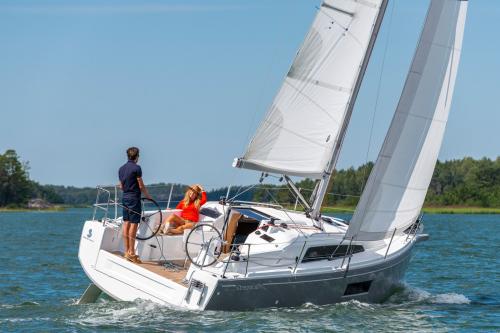
This is the architectural element that surprises most when first stepping aboard an Océanis 30.1: two wheels in twin-rudder configuration, exactly as on a 12-13-metre yacht.
This configuration is not cosmetic. It concretely changes the sailing experience for two reasons. The first is visibility: from each wheel, the skipper has a perfect view of the sail and can anticipate wind variations without obstruction. The second is at-anchor sociability: the space between the two wheels, clear, becomes the natural social hub of the cockpit.
In its size and price category, this architectural choice is rare enough to be a genuine differentiating argument — most competitors (Bavaria C34, Dufour 310) offer a tiller or single central wheel, not twin-rudder configuration.
The electric option: the innovation nobody explains correctly
This is the most poorly documented point of the Océanis 30.1, and yet one of the most interesting for understanding where small-size sailing is going.
The Océanis 30.1 is available with a 100% electric propulsion option — an electric motor replacing the 21 hp diesel. This configuration is coupled with the Seanapps app for remote boat monitoring (battery state, GPS position) from a smartphone.
Concretely, what electric propulsion changes for the coastal cruising sailor: at anchor, arrival and departure are in complete silence — no diesel noise, no fuel smell, no vibration. This is a radical quality-of-life change for sailors who do many anchorages. Maintenance is also simplified — an electric motor has no oil changes, belts, fuel filters or cooling to service. Annual maintenance is considerably reduced.
The trade-off is motoring range — limited by onboard battery capacity. For sailors who do only coastal cruising with sailing passages and short motoring legs, this range is sufficient. For those doing long passages in light-wind areas, the diesel version remains better suited.
Road-trailer gauge: a practical argument often underestimated
The Océanis 30.1 fits within standard road trailer dimensions — with its mast lowered on its dedicated trailer, it can be transported by road without an oversized load permit. This argument may seem anecdotal but for some owners it is structuring.
A boater based in south-west France who wants to sail a season in Brittany and the next in the Mediterranean can do so with a 30.1 without the logistical constraints and cost of an oversized load convoy. This mobility is impossible with an 11-12-metre yacht that must sail between its areas and cannot easily be transported by road.
CE B certification: a safety level that commits
The Océanis 30.1 is certified CE B6/C8/D10 — CE B certification (6 persons) corresponds to offshore navigation, defined as crossings in winds up to Beaufort 8 and waves up to 4 metres. This is the certification that authorises Mediterranean-Corsica crossings, Channel-Brittany passages or short offshore sorties.
Not all 9-metre sailing yachts carry this certification. It implies that the boat was designed and tested to withstand serious conditions — and that it can legally be used for navigation that is beyond some competitors certified only to CE C.
The versions: tiller or twin wheels
The Océanis 30.1 is available in two helm versions corresponding to different sailing philosophies.
The tiller version is the lightest, least cluttered cockpit version, and the most "pure" from a sailing sensation standpoint — the tiller transmits boat information directly to the hand, without filtering. It is often the preferred version of experienced sailors who navigate solo or as a couple and want a lively, communicative boat.
The twin wheel version offers the large-yacht sailing experience described above — visibility, cockpit clearance, at-anchor sociability. It is slightly heavier and requires different sailing reflexes, but is generally perceived as more comfortable for family crews and multi-day outings.
What to check when buying second-hand
Electric or diesel version — first point to identify. The two versions have radically different maintenance profiles. For the electric version: propulsion battery condition (lifespan 8-10 years depending on use and charge management), condition of the electric motor and controller.
Diesel version (21 hp): annual service records with invoices, condition of the saildrive or transmission depending on configuration.
Lifting keel on equipped versions — hydraulic raising test during viewing, inspection of the retention mechanism.
Sails — on a 2020-2021 example now 5-6 years old, original sails are approaching mid-life. New mainsail for a 30.1: €3,000 to €6,000 depending on quality.
Océanis 30.1 market prices in 2025-2026
| Year | Indicative condition | Market price |
|---|---|---|
| 2020-2021 | Good condition, well-equipped | €99,000 – €125,000 incl. VAT |
| 2022-2023 | Very good condition | €110,000 – €140,000 incl. VAT |
| 2024 | Near-new | €140,000 – €155,000 incl. VAT |
| 2026 new | New, standard | From €130,440 incl. VAT |
| 2026 new, full options | New, well-equipped | up to €179,000 incl. VAT |
Indicative ranges, market May 2026. VAT included unless otherwise stated.
Our verdict
The Océanis 30.1 is Bénéteau's best argument for buyers whose budget does not exceed €130,000 but who refuse to sail on a boat without nautical ambition. Its Finot-Conq hull, twin-wheel option, electric propulsion option and CE B certification place it clearly above the average for its size category — while remaining within a road-trailer gauge and accessible maintenance level. It is a boat for sailors who know what they are doing and who do not accept compromise on sailing quality because of a limited budget.