

Jeanneau Cap Camarat 10.5 WA / CC for sale
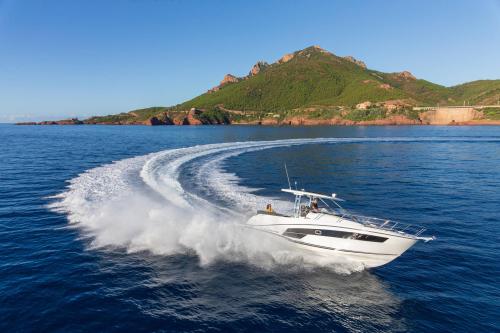
jeanneau cap camarat 10.5
149 000€ All Tax IncludedUsed

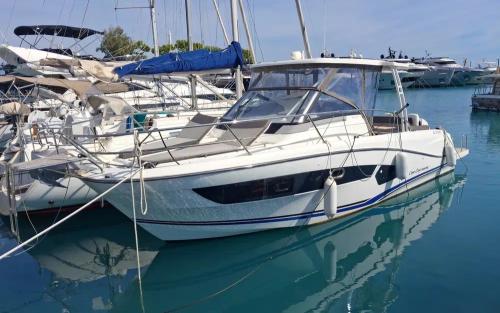
jeanneau cap camarat 10.5 wa
169 900€ All Tax IncludedUsed
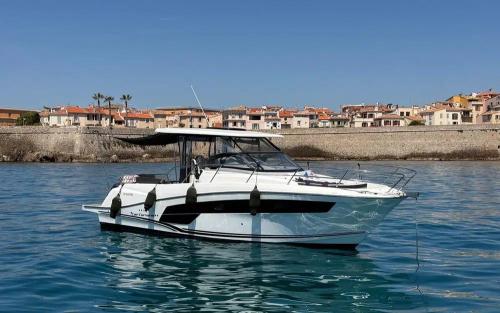
jeanneau cap camarat 10.5 wa
190 000€ All Tax IncludedUsed
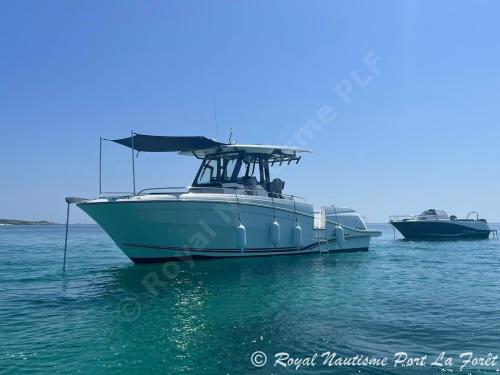
jeanneau cap camarat 10.5 cc
229 000€ All Tax IncludedUsed

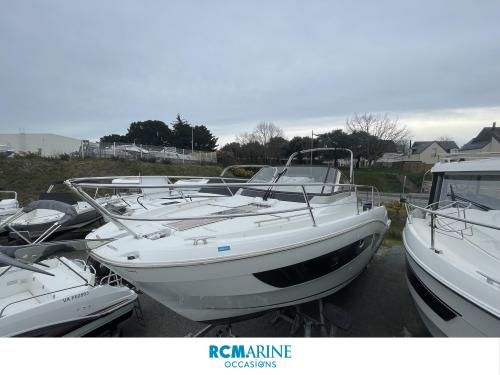
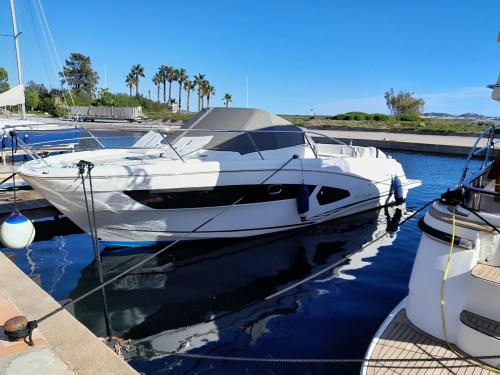
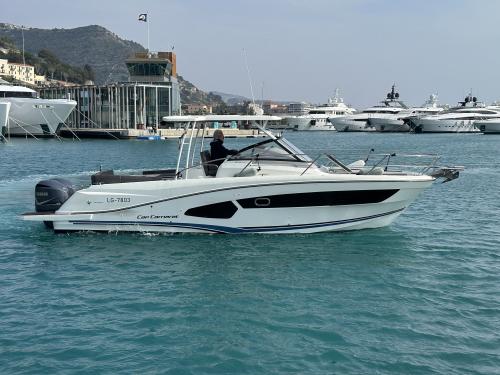

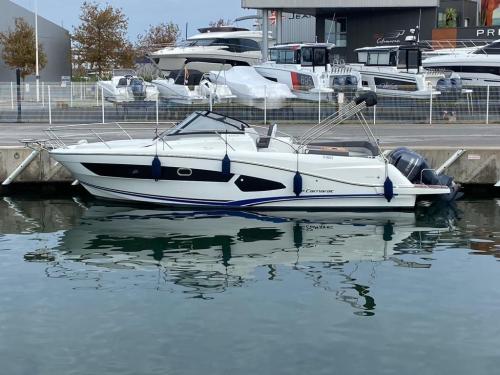
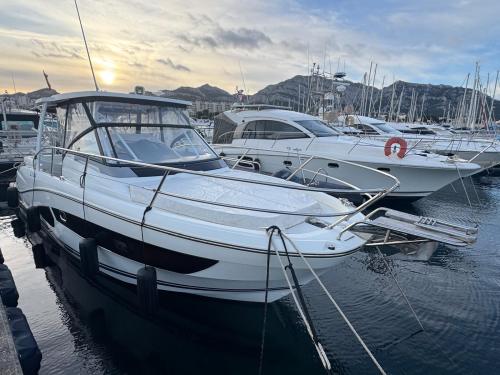
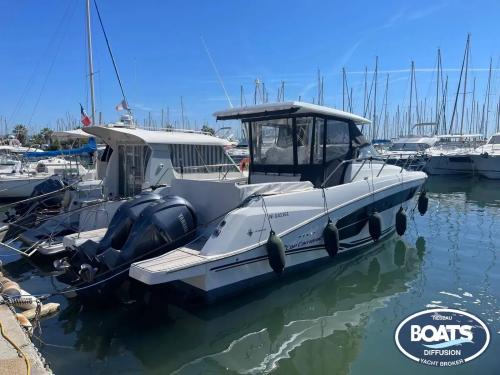
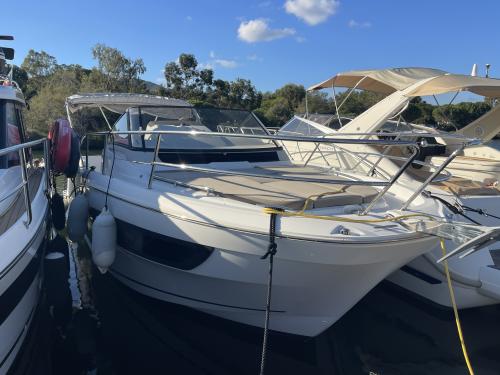
jeanneau cap camarat 10.5 wa
125 000€ All Tax IncludedUsed
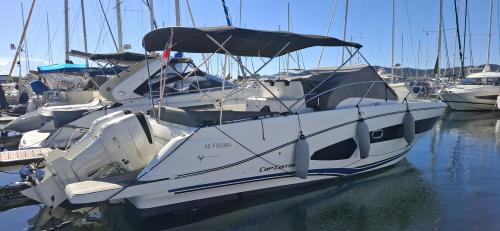
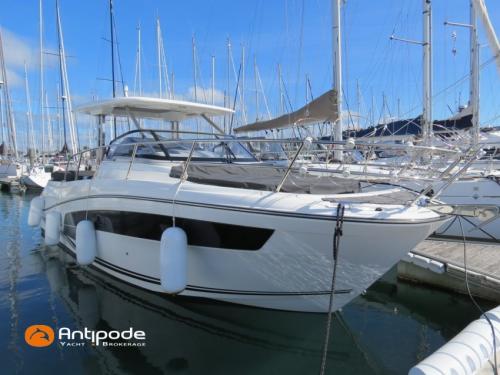
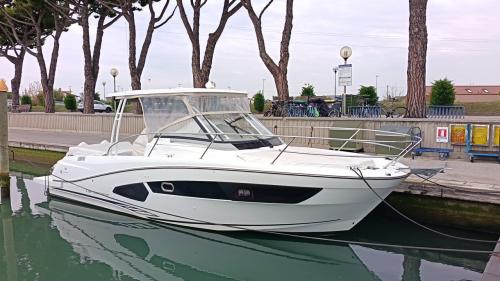
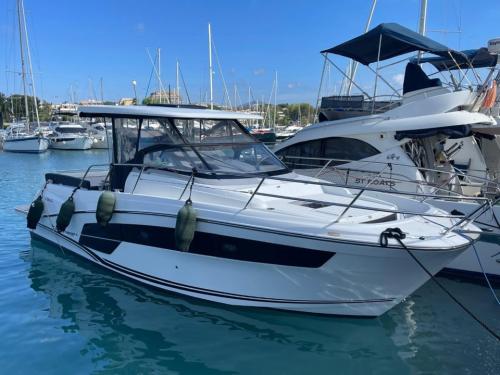

jeanneau cap camarat 10.5
169 000€ All Tax IncludedUsed
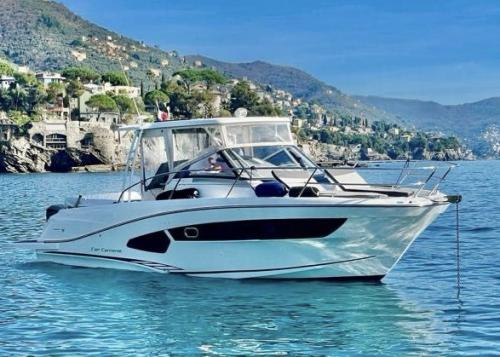
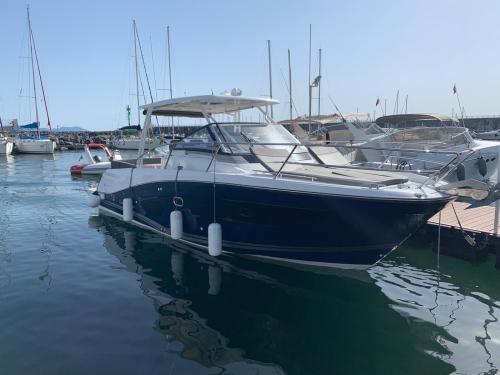
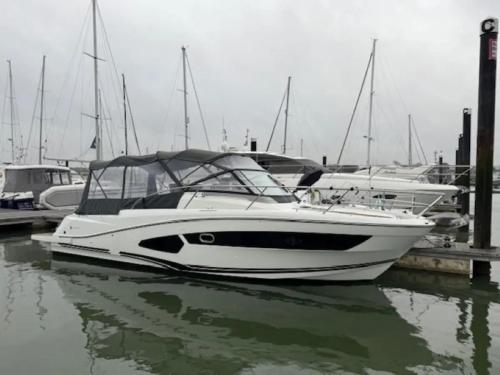
jeanneau jeanneau cap camerat 10.5 wa
129 500£ All Tax IncludedPre owned
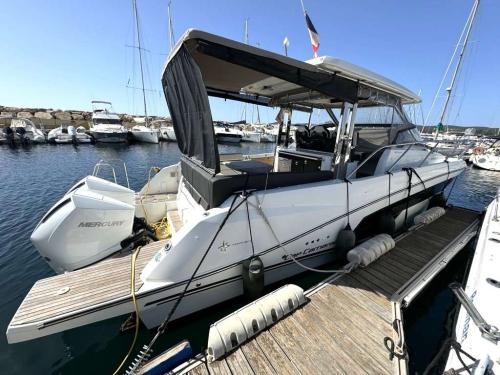
jeanneau cap camarat 10.5 wa
255 000€ All Tax IncludedUsed
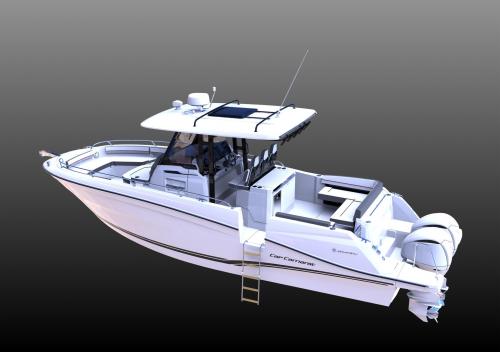
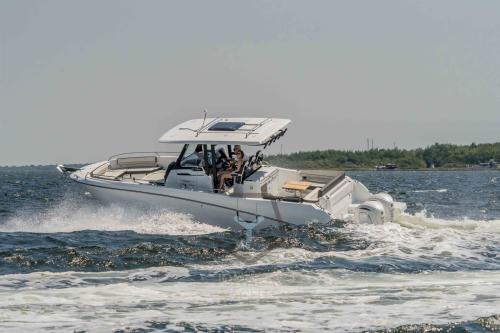

Yachting Address Review — Jeanneau Cap Camarat 10.5 WA and CC
The Cap Camarat 10.5 proves that Jeanneau didn't stumble into the 10-metre walkaround segment by accident — it built its position with a precision that has allowed it to dominate this category for over a decade without ever truly being caught.
This isn't marketing language. The 28 active listings on this page, spanning model years from 2016 to 2026 and priced between €119,000 and €299,900, are proof of a market that works. A Cap Camarat 10.5 WA sells quickly, negotiates little, and holds its value with a consistency that few 10-metre motorboats can claim. That is the definition of a successful model.
WA or CC: two boats, two philosophies
This is the first question to settle before arranging any viewing — and it is rarely addressed clearly in listings that mix both versions on this page.
The Cap Camarat 10.5 WA (Walk Around) is the original and most widespread version — a boat with wide side decks that allow you to move freely from stern to bow without stepping over anything. The helm station is integrated into the central deck structure, with a forward cabin accessible from inside. It is an open, sporty architecture where the act of navigation takes precedence over sedentary life aboard. The vast majority of listings on this page are WA models.
The Cap Camarat 10.5 CC (Center Console) is the more recent version — a central console with no enclosed helm station, a configuration popular in Anglo-Saxon markets and in Brittany for offshore fishing and active water sports. The deck is completely open 360 degrees around, which makes line management and movement aboard effortless. It is a sportier, more stripped-back boat, less suited to family outings with non-sporting passengers. The two new 2025-2026 CC models listed at €269,040 on this page illustrate this positioning.
Series 1 and Series 2: what really changed
The Series 1 / Series 2 distinction is central to the second-hand Cap Camarat 10.5 WA market — and it is worth considerably more than the €20,000 to €30,000 price gap it generates.
Series 1 (2012-2019) is the founding generation. Its hull designed by Michaël Peters — the same naval architect who gave the boat its legendary sea behaviour — is one of the finest hull designs ever produced in this category. Its performance in choppy conditions remains unmatched in the segment. Its compact but functional forward cabin allows a comfortable night for two. All 2016-2019 listings on this page between €119,000 and €165,000 belong to this generation.
Series 2 (from 2020 onwards) thoroughly modernised what Series 1 had allowed to age slightly. The cockpit was widened, the swim platform enlarged, the helm station ergonomics improved, and the hard T-Top integration made structurally cleaner. Maximum power was raised to 2 × 350 hp — which on 10.57 metres produces top speeds exceeding 45 knots. Listings from 2020-2024 between €159,000 and €299,900 correspond to this generation. The 2022 Series 2 hard T-Top example at €219,000 with just 85 hours at Golfe-Juan is the archetype of a smart purchase in this category.
The engines: 300 or 350 hp, and which brand?
This question comes up at every viewing — and it deserves a precise answer.
The 2 × 300 hp configuration — Suzuki DF300AP, Mercury 300 Verado, or Yamaha F300 depending on the example — is the optimal balance for standard family use. It pushes the Cap Camarat 10.5 to 32-36 knots at comfortable cruising speed with reasonable fuel consumption, and provides sufficient power reserve when loaded or in rough conditions.
The 2 × 350 hp configuration — Yamaha F350 V8 or Mercury Verado 350 — is the high-performance version. It adds around ten knots to the top speed, a considerable propulsion margin under load, and a helm responsiveness that the 300 hp engines simply cannot match. The trade-off is higher annual service costs and increased fuel consumption at full throttle.
Engine brand affects resale value — Yamaha F350 V8 engines are generally perceived most favourably on the French market due to their dense service network and reliability reputation. Mercury Verado 350 engines are excellent but their specialist servicing is less accessible outside major marinas. Suzuki DF300-350 APX engines are growing in reputation and are appreciated for their quietness and smooth power delivery.
Why the T-Top has become essential
The length discrepancy in listings — some examples showing 9.31-9.36 m, others 10.50-10.93 m — is simply explained by whether the hard T-Top is included in the overall length measurement. This display difference is not an error but reflects inconsistent measurement practices between brokers.
The hard T-Top itself has become near-essential on the current market. In the Mediterranean, it provides permanent shade over the helm station and central cockpit that fundamentally changes comfort during a full day at sea. On the Atlantic or Brittany coasts, it shields against spray and rain. Examples without a T-Top have become harder to sell since Series 2 popularised it. On the current market, the presence of a hard T-Top adds €8,000 to €15,000 of perceived value — a gap confirmed by the prices in this page's listings.
What to check when buying second-hand
Engine condition is the first check — full service history with invoices is mandatory on twin 300-350 hp engines. Impeller replaced at manufacturer intervals, anodes inspected annually, engine mount condition checked. On Series 1 examples from 2015-2018 approaching 400-600 hours, a full assessment by a certified Yamaha or Mercury mechanic is recommended before signing.
Electric trim tabs deserve a full range-of-motion check — actuators can seize on poorly maintained examples or those stored afloat.
T-Top condition on Series 1 examples with aftermarket T-Tops — some were added post-delivery by local boatyards with variable integration quality. An original Jeanneau T-Top is preferable to a third-party installation.
Exterior upholstery on 2015-2018 Series 1 examples may show signs of wear — cockpit cushions and forward cabin cushions should be inspected. Budget €2,000 to €4,000 for a full replacement if necessary.
Market prices for the Cap Camarat 10.5 in 2025-2026
| Version | Year | Indicative price |
|---|---|---|
| Cap Camarat 10.5 WA Series 1 (2 × 300-350 hp) | 2015-2017 | €119,000 – €145,000 |
| Cap Camarat 10.5 WA Series 1 (2 × 350 hp, well equipped) | 2018-2019 | €145,000 – €170,000 |
| Cap Camarat 10.5 WA Series 2 (2 × 300-350 hp) | 2020-2021 | €155,000 – €195,000 |
| Cap Camarat 10.5 WA Series 2 hard T-Top (2 × 300-350 hp) | 2022-2023 | €215,000 – €265,000 |
| Cap Camarat 10.5 WA Series 2 (new/near-new 2024) | 2024 | €255,000 – €300,000 |
| Cap Camarat 10.5 CC (new 2025-2026) | — | €255,000 – €270,000 |
Indicative ranges, market May 2026. VAT included unless otherwise stated.
Our verdict
The Cap Camarat 10.5 WA is one of the most coherent 10-metre dayboats on the French market over the past decade. The Michaël Peters hull remains the technical benchmark in its segment, Series 2 corrected the minor ergonomic shortcomings of Series 1, and its second-hand market is one of the most liquid in French powerboat plaisance. For buyers seeking a combination of sailing pleasure, family versatility and resale peace of mind, it is a reference that is hard to overlook in this price range.
- Cap Camarat 10.5 WA SERIE 2
- Cap Camarat 10.5 WA
- Cap Camarat 12.5 WA
- Cap Camarat 5.5 WA
- Cap Camarat 6.5 WA
- Cap Camarat 7.5
- Cap Camarat 8.5 WA
- Cap Camarat 9.0 CC
- Cap Camarat 9.0 WA
- DB/37 IB
- DB/37 OB
- DB/43 IB
- DB/43 OB
- Leader 33
- Leader 36
- Leader 8
- Leader 805
- Merry Fisher 1095
- Merry Fisher 1095 Fly
- Merry Fisher 1295 Fly
- Merry Fisher 605 Serie2
- Merry Fisher 695
- Merry Fisher 695 Serie2
- Merry Fisher 695 Sport
- Merry Fisher 795 Serie2
- Merry Fisher 795 Sport
- Merry Fisher 895
- Merry Fisher 895 Serie 2
- Merry Fisher 895 Sport
- Merry Fisher 925
- NC 37