

Beneteau Flyer 8 Spacedeck for sale
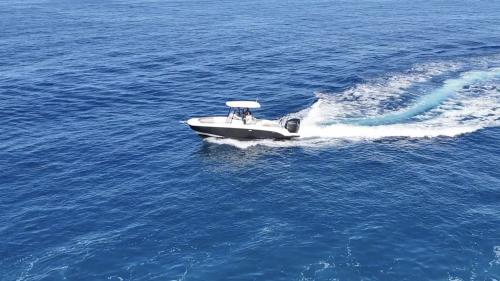
beneteau flyer 8 spacedeck
138 000€ All Tax IncludedNauticoncept
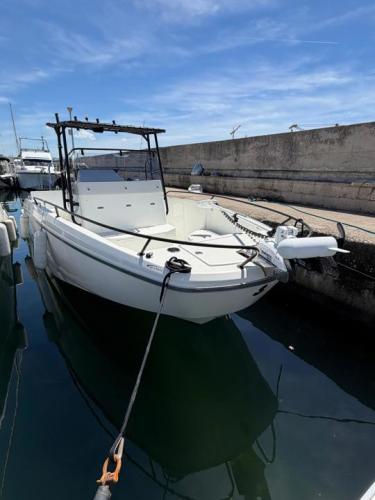
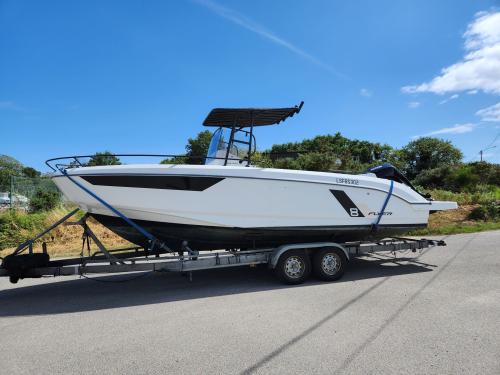
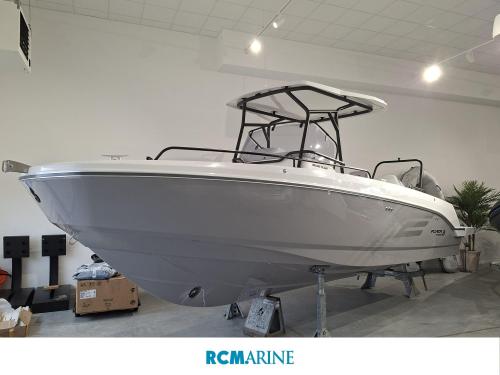
beneteau flyer 8 spacedeck v2
119 900€ All Tax IncludedNauticoncept
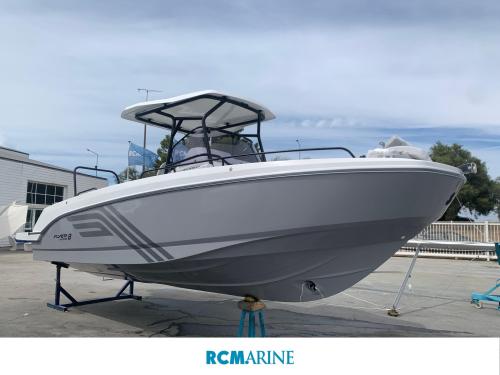
beneteau flyer 8 spacedeck v2
119 900€ All Tax IncludedNauticoncept
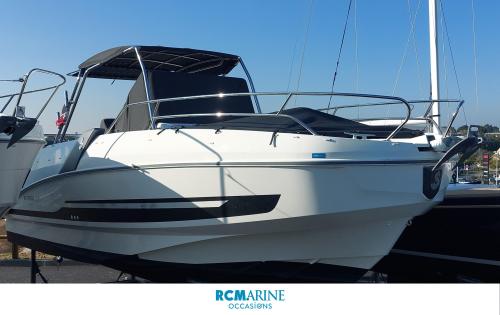
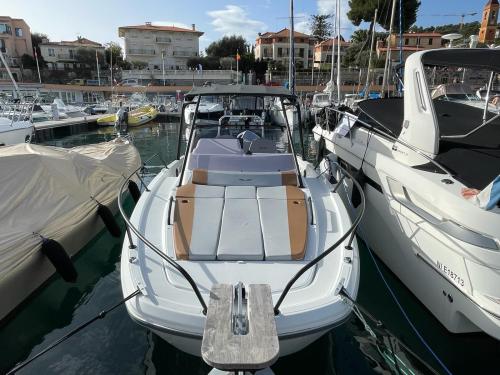
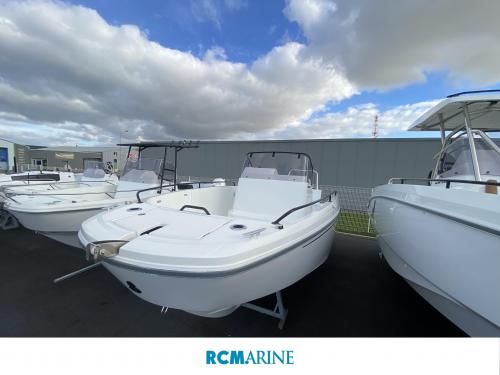

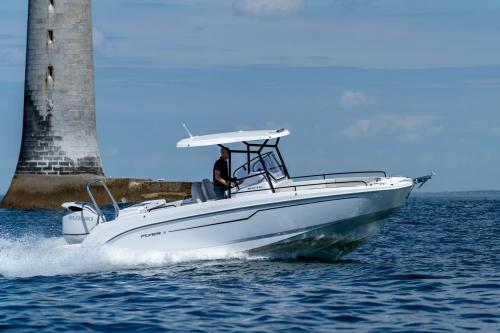

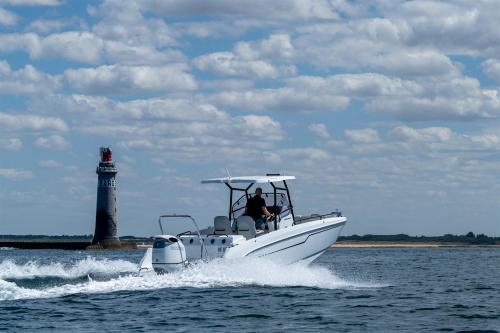
The Yachting Address Review — Bénéteau Flyer 8 SPACEdeck
The Flyer 8 SPACEdeck is the boat that pushed the SPACEdeck concept into an entirely new dimension — the moment when an 8-meter flush-deck dayboat stopped being just a practical idea and became a genuine statement of intent.
At 8.17 meters overall length, powered by a single outboard up to 350 hp, it is the largest and most ambitious Flyer SPACEdeck ever produced. Its completely flush deck layout — without thresholds, steps or level changes between the cockpit and the foredeck — is its most distinctive architectural signature. On a boat of this size, that uninterrupted deck changes the onboard experience fundamentally: you move, fish and circulate with a freedom traditional raised-cockpit boats simply cannot provide.
The Flyer 8 generations: do not confuse them
The listings grouped under the “Flyer 8” name actually cover almost thirty-five years of Bénéteau production — boats that have virtually nothing in common besides their approximate size and brand name.
The original Flyer 8 (1985–1995, 8.75 meters, twin inboard turbo diesel) belongs to another era entirely — a fast cruiser from the 1980s with twin diesel engines and styling completely unrelated to the modern Flyer lineup. The examples still available around €17,000–€18,000 require serious mechanical inspection before purchase.
The Flyer 8 SPACEdeck V1 (2016–2022, 8.17 meters) introduced the modern flush-deck philosophy at this size. Powered by a single outboard up to the Suzuki DF350 APXX, it created the open walkaround layout that defines the model today. Used 2019–2022 examples generally range between €54,000 and €82,000 depending on condition and engine hours — currently the most active segment of the used market.
The Flyer 8 SPACEdeck V2 (since 2022) is the current generation — redesigned cockpit layout, improved finishes and integration of the Seanapps connected-boat system for remote monitoring of fuel, batteries and onboard systems. New boats begin around €58,920 excluding engine, while fully equipped Pilot Edition versions with Suzuki 350 hp can exceed €119,900. Used V2 units remain rare and essentially nearly new.
The Flyer 8.8 SPACEdeck (2015–2020, approximately 9 meters) is a distinct twin-engine version equipped with two Suzuki 200 hp outboards. It moves beyond the pure dayboat category and approaches the small weekender segment. Some listings incorrectly group it with the Flyer 8, although it is effectively a different boat with different strengths and compromises. 2017–2018 examples generally trade between €75,000 and €90,000.
What the flush deck layout genuinely changes
This is the question almost every buyer asks when discovering the boat for the first time — and the answer deserves precision.
A flush deck means there is no raised cockpit, no level change between the helm station and the rest of the boat. On the Flyer 8 SPACEdeck, you board from the swim platform and can walk all the way to the bow without climbing, stepping over obstacles or constantly holding onto rails. For fishing, it is a genuine practical revolution — you can follow a fish from stern to bow without risking a fall every few steps. For family navigation, it increases onboard safety because movement feels more natural and predictable.
The compromise is reduced natural protection against spray and rougher water. Traditional raised cockpits physically shield passengers from water intrusion. On a flush-deck boat, protection relies mainly on the wraparound windshield and guardrails — less effective in difficult seas. This is not a flaw, but buyers coming from conventional cockpit boats notice the difference immediately.
300 or 350 hp?
The Flyer 8 SPACEdeck is certified for up to 350 hp with a single outboard — enormous power for an 8-meter boat. The most common configurations on the used market are the Suzuki DF350APXX and DF300APXX, effectively the flagship engines of Suzuki’s premium outboard range.
With 350 hp, the Flyer 8 SPACEdeck exceeds 48 knots at top speed and cruises comfortably between 30 and 35 knots. It is genuinely spectacular — but for normal family coastal boating, it is excessive in roughly 90% of situations. The 300 hp configuration already delivers very high performance — 42–44 knots maximum speed and comfortable cruising at 25–30 knots — with slightly lower fuel consumption and reduced yearly maintenance costs.
On the used market, the price premium between equivalent 300 hp and 350 hp versions generally ranges between €8,000 and €12,000. That premium only becomes fully justified for owners regularly navigating in exposed conditions, carrying heavy onboard loads or prioritizing outright speed.
What the V2 genuinely improves over the V1
The V2 is not a revolution — it is a targeted evolution focused on the weak points owners identified on the first generation.
The cockpit became larger and better organized. The rotating bolster seats are more ergonomic, the aft sunpad conversion works more naturally and the central table positioning now allows six adults to dine comfortably. The Seanapps connected system — allowing owners to monitor fuel levels, batteries, water and engine information remotely through a smartphone — represents a genuine added value for boats remaining in marina berths between outings.
Overall finish quality is also slightly superior on the V2, with cockpit materials offering improved UV resistance and more consistent assembly quality across production units. This is not a criticism of the V1 — simply the normal evolution of a model refined after several years of owner feedback.
The comparison that really matters
Against the Flyer 8 SUNdeck, the SPACEdeck is more sport-oriented, more functional for fishing and active boating, but less optimized for lounging comfort at anchor. These are two very different philosophies — the right choice depends entirely on the owner’s priorities.
Against the Axopar 28 T-Top or the Saxdor 270 GTO — boats positioned within a similar price range — the Flyer 8 SPACEdeck is larger, more stable and more family-oriented, although slightly less extreme in outright performance. It reflects a different philosophy: less radical than the Nordic boats, but also more versatile for mixed family use.
Points to inspect before buying used
On the V1 (2016–2022): inspect the flush deck condition carefully — scratches and impacts are more visible and harder to disguise on a flat deck than inside a conventional cockpit. Verify complete maintenance history for the Suzuki DF300 or DF350: impeller replacements, annual anode inspections and the condition of engine mounting systems. On 2016–2018 boats approaching 400–500 hours, preventive servicing of heat exchangers and seals should be budgeted.
On the recent V2: the used market remains extremely young with few available units. Verify the correct operation of the Seanapps system and sensor connectivity — a recent technology that occasionally suffers from early-generation configuration issues.
Flyer 8 SPACEdeck market prices in 2025–2026
| Version | Model years | Indicative price |
|---|---|---|
| Flyer 8 SPACEdeck V1 (300 hp) | 2016–2019 | €54,000 – €68,000 |
| Flyer 8 SPACEdeck V1 (350 hp) | 2019–2022 | €62,000 – €82,000 |
| Flyer 8.8 SPACEdeck (2 × 200 hp) | 2016–2019 | €72,000 – €85,000 |
| Flyer 8 SPACEdeck V2 (300–350 hp, new/nearly new) | 2022–2026 | €85,000 – €120,000 |
Indicative ranges, May 2026 market. VAT included unless otherwise stated.
Our verdict: the Flyer 8 SPACEdeck is the most ambitious dayboat of the entire Flyer lineup — the model pushing the flush-deck concept to its limits on an 8-meter hull. For owners wanting an active, fully walkable boat capable of combining fast navigation with fishing, watersports and group day cruising, it represents a proposition with almost no direct equivalent either within the Bénéteau lineup or among French competitors. Provided buyers accept that protection in rough conditions remains lower than on traditional cockpit boats — a compromise entirely intentional and coherent with the mission this boat was designed for.
- Antares 11
- Antares 12
- Antares 30
- Antares 6
- Antares 7
- Antares 8
- Antares 9
- Antares 9 OB
- Antares 10.80
- Flyer 10
- Flyer 6 Sundeck
- Flyer 6 SPACEdeck
- Flyer 7 SPACEdeck
- Flyer 7 SUNdeck
- Flyer 8 Spacedeck
- Flyer 8 SUNdeck
- Flyer 9 Spacedeck
- Flyer 9 SUNdeck
- Grand Trawler 62
- Gran Turismo 32
- Gran Turismo 36
- Gran Turismo 41
- Gran Turismo 45
- Swift Trawler 35
- Swift Trawler 41 Fly
- Swift Trawler 41 Sedan
- Swift Trawler 48