
 > Amel Yachts for Sale
Amel Yachts for sale
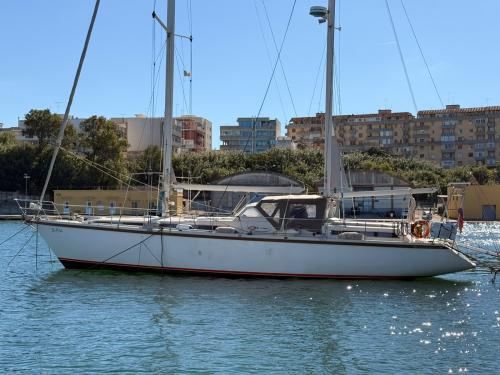
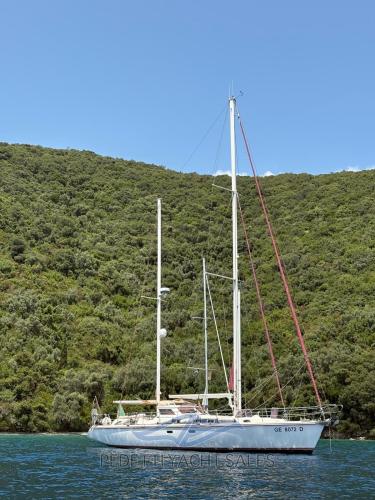
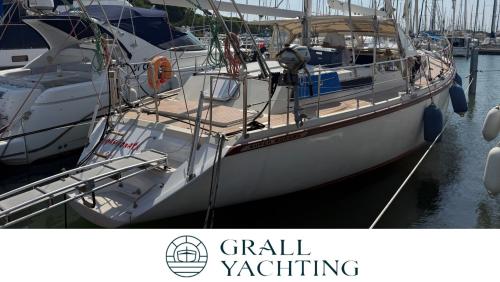
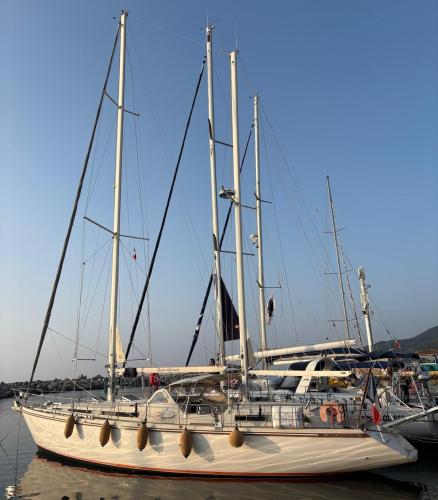
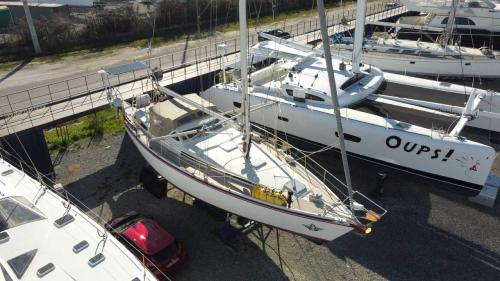
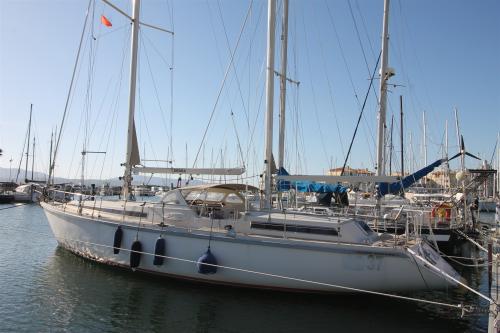
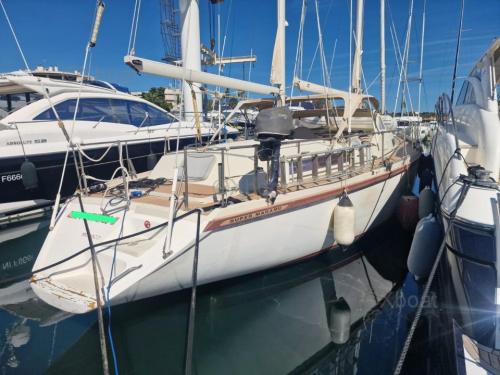
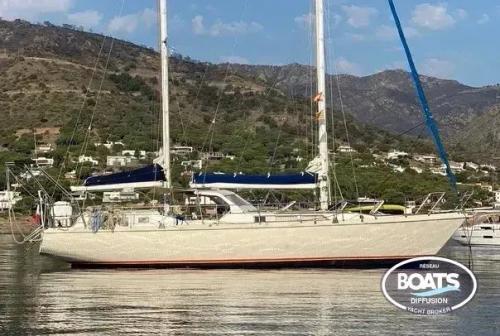
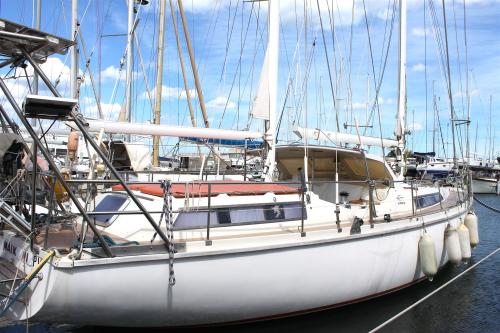
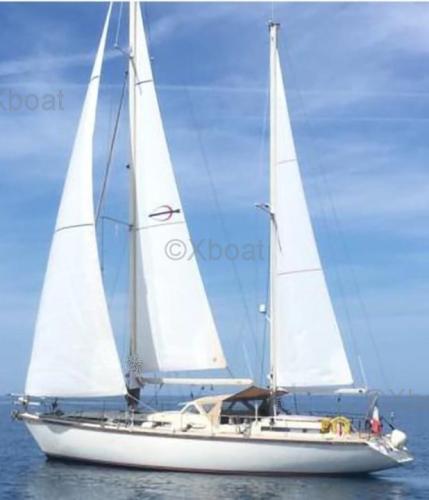
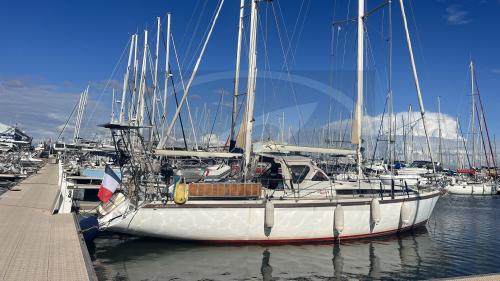
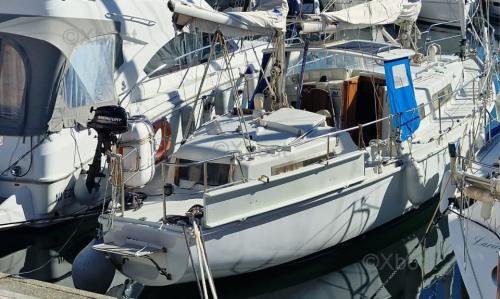
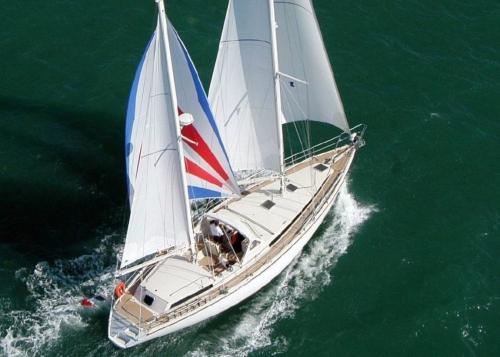
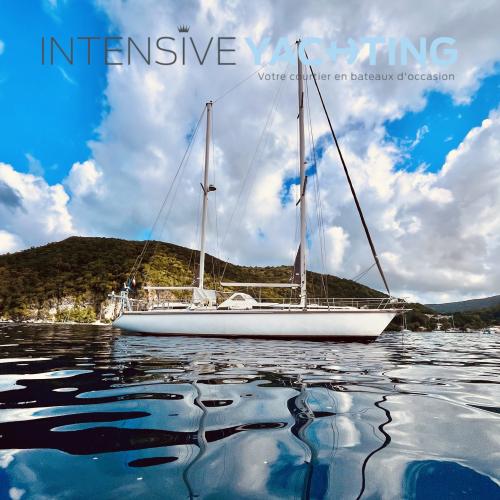
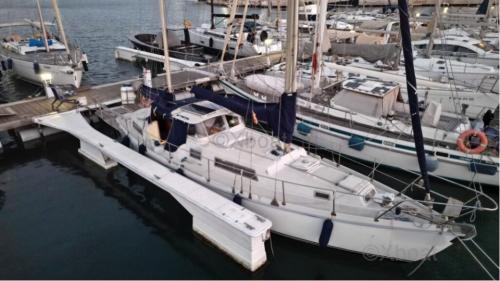
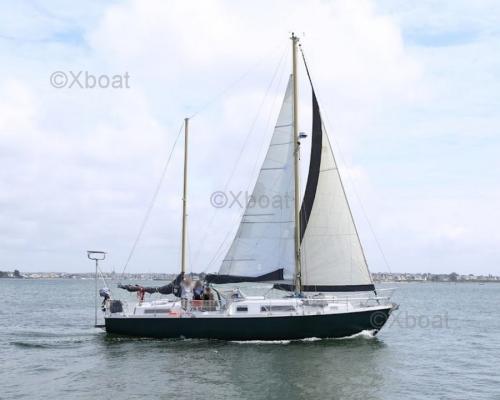
Yachting Address Review — Amel: the only yard that builds sailing yachts as if every owner is about to sail around the world
There is a simple test for measuring Amel's singularity among all sailing yacht yards: look at the price of a 1990 Super Maramu on this page. This boat is 35 years old. It is worth between €160,000 and €270,000. A 1990 Bavaria 44, Bénéteau Océanis 430 or Dufour 430 would be worth €15,000 to €35,000 today. The gap is a factor of 5 to 10. This is not nostalgia, not a fashion, not a pricing error. It is the translation into euros of a construction philosophy that Henri Amel invented in Rochefort in 1952 — and that no other French yard has truly managed to replicate in its results.
Henri Amel: the man who built boats to go far, not to be sold
Henri Amel founded his yard in 1952 in Rochefort-sur-Mer. At that time, French yachting was not yet thinking in terms of long voyages — it thought coastal regattas, Mediterranean cruises, weekend outings. Henri Amel thought differently: he wanted to build sailing yachts for people who genuinely wanted to depart — Atlantic crossings, circumnavigations, long passages solo or as a couple. This obsession with the long voyage would structure every technical choice in every model to this day.
Henri Amel died in 1989, but the yard he founded continued on the same principles — deliberately limited production (never more than 80 to 100 boats per year, often considerably fewer), near-artisanal construction where each boat is a personal order, and a categorical refusal to sacrifice robustness for sale price.
The ketch rig: a technical reason, not an aesthetic posture
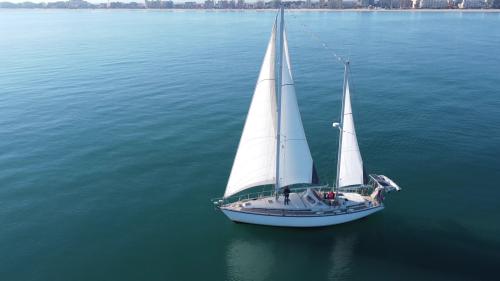
The most visible characteristic of large Amel models — Maramu, Super Maramu, Amel 54, Amel 60 — is their ketch rig: two masts, a mainsail on the main mast and a mizzen (smaller sail) on the aft mast. This choice is not aesthetic. It is a technical decision directly dictated by the long-voyage-as-a-couple philosophy.
Splitting the sail plan across two masts allows the canvas to be divided into smaller portions, more easily handled by a two-person crew, particularly at night or in deteriorating conditions. The mainsail on a 16-metre ketch represents approximately 50-60 m² — manageable by one person on a boom furler. The equivalent mainsail on a sloop of the same size would reach 70-90 m² — far more physical to reef alone when the wind picks up at two in the morning in mid-Atlantic.
The mizzen also allows the boat to be balanced for good course-keeping downwind, reducing autopilot workload on long passages. Across a 40,000-mile circumnavigation, these small energy and mental load savings add up to make a real difference.
What an Amel has that others don't
Integral furling: since the earliest generations, Amel has systematically installed furlers on all sails — mainsail, genoa, mizzen, sometimes even the spinnaker. In the era of the Maramu in the 1970s-1980s, this was revolutionary. Today it remains the signature of a boat designed for short-handed manoeuvrability rather than racing performance.
Construction robustness: Amel hulls are laminated thicker than mass-production norms. Fittings are oversized. Cable runs and tanks are designed for 30 years of sailing without heavy maintenance. This over-investment in durability costs more to build — and this is precisely what explains why owners have no desire to part with them.
Electrical autonomy: from the earliest generations, Amel integrated generators, generous battery banks and multiple charging systems. On recent versions (Amel 54, Amel 60), electrical autonomy approaches that of a professional charter yacht.
The helm system: Amel has long used hydraulic helm systems (hydraulic wheel) that deliver course precision impossible to match with tiller or mechanical wheel steering over long passages.
Cockpit organisation: on a Super Maramu or Amel 54, the cockpit is organised so that one person can manoeuvre the entire boat — choose sails, operate furlers, adjust the autopilot — without leaving their station. This is the very definition of the long-voyage-as-a-couple boat.
The Amel range: from accessible entry to ultimate bluewater
The Kirk (1970s, 9-10 metres) and Euros 41 (1974-1979, 12.35 metres) are the yard's earliest productions — period cruising sailing yachts built with Amel DNA but in accessible sizes.
The Maramu (1979-1990, 13.80-13.97 metres) is the first great name in the range — the one that established Amel's international reputation. Ketch with integral furling, built for circumnavigation, approximately 290 units produced, found on pontoons worldwide. Examples from 1979-1988 between €80,000 and €130,000 on this page are 35-45-year-old boats still sailing — the most eloquent demonstration of Amel durability.
The Super Maramu (1988-2004, 15.86-16.50 metres) is the range's flagship and the model that consecrated Amel's global reputation. Larger than the Maramu, better-equipped, with a more powerful diesel powertrain and superior finish level. The "Super Maramu 2000" (from 2002) is an updated version. Between €160,000 and €270,000 for 1988-2003 examples.
The Amel 54 (from 2006, 16.40 metres) succeeded the Super Maramu with more contemporary lines, a reorganised deck layout and even stronger powertrain. It is the most recent Amel model with a significant second-hand market history.
The Amel 60 (from 2018, 19.00 metres) is the current flagship — a 19-metre superyacht-gauge sailing yacht, produced at approximately 10 to 15 units per year, at over a million euros new.
The Amel community: an asset not found in the specifications
Owning an Amel also means joining one of the world's most active sailing communities. The Amel Owners Network has several thousand members on every continent, with regular gatherings at major waypoints (Horta in the Azores, Las Palmas in the Canaries, Trinidad, Panama, Langkawi in Malaysia). This community constantly shares experience feedback, technical solutions, reliable yard contacts at remote stops and parts availability updates.
For a second-hand buyer planning a long voyage, belonging to this community has concrete value that is hard to quantify but real: a support network at sea that Bavaria or Bénéteau owners simply don't have in the same way.
What the second-hand market reveals about Amel's value
The prices observed on this page describe a market that resists the passage of time in a way quite stunning for a production sailing yacht. A 1990-1994 Super Maramu at €160,000 to €255,000 has traversed 30-35 years without losing the bulk of its nominal value — and accounting for inflation, it has actually increased in real terms. This is the patrimonial behaviour of an exceptional object, not a series-produced sailing yacht.
This value conservation is sustained by three mutually reinforcing mechanisms: limited production (few units on the market), durability (boats still sailing at 40 years old), and the community (informed buyers who know exactly what they are buying and will not sell cheaply).
What to check when buying second-hand
Diesel engine condition — Amel has used inboard diesel since the beginning (Volvo, Yanmar or Perkins depending on generation). On a 1990-2000 Super Maramu with perhaps 3,000 to 6,000 hours on the clock, request complete engine service history. Records with an official dealer are the strongest signal of a seriously maintained boat.
Furler condition — the integral furlers are Amel's signature but also the first wear point on older boats. Masthead bearings and feeder groove condition deserve specialist inspection — a boom furler that jams in mid-Atlantic is more than an inconvenience.
Hydraulic steering — on Super Maramu and Amel 54, the hydraulic steering system requires regular fluid and ram maintenance. Request specific service history for this system.
Verification with the yard — Amel maintains a construction register of all its boats. For any serious purchase, a call to the La Rochelle yard to verify hull history (registration number, build date, original equipment) is a precaution that costs nothing and can prevent many surprises.
Amel market prices in 2025-2026
| Model | Generation | Indicative price |
|---|---|---|
| Amel Kirk (9-10 m) | 1975-1980 | €19,000 – €32,000 incl. VAT |
| Amel Euros 41 (12.35 m) | 1974-1980 | €35,000 – €70,000 incl. VAT |
| Amel Maramu (13.80-13.97 m) | 1979-1990 | €80,000 – €130,000 incl. VAT |
| Amel Santorin (13.95 m) | 1985-1995 | €130,000 – €160,000 incl. VAT |
| Amel Mango 52 (15.80 m) | 1984-1990 | €130,000 – €175,000 incl. VAT |
| Amel Super Maramu (15.86-16.00 m) | 1988-2001 | €155,000 – €235,000 incl. VAT |
| Amel Super Maramu 2000 (15.97-16.50 m) | 2002-2004 | €235,000 – €290,000 incl. VAT |
| Amel 54 (16.40 m) | 2006-2018 | €380,000 – €500,000 incl. VAT |
| Amel 60 (19.00 m) | 2018-2025 | €1,400,000 – €1,700,000 incl. VAT |
Indicative ranges, market May 2026. VAT included unless otherwise stated.
Our verdict
Amel is not the yard you choose for the fastest, cheapest, most modern or most common yacht on the pontoon. It is the yard you choose when you have decided to make a long voyage — a real one, not a summer cruise — and you want a boat that will still be worth something when you return. The value conservation of second-hand Amel is not an accident: it is the price of a construction philosophy obsessively oriented toward durability, safety and autonomy. For other uses — coastal cruising, racing, family day sailing — there are more economical and equally valid choices. For the circumnavigation, Amel remains the reference that nobody has truly replaced.